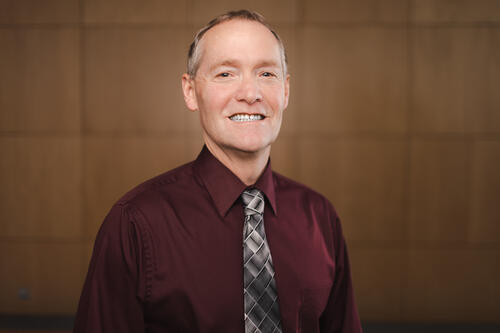
Class of 2010 Welcomed at New Student Convocation
The
following is the complete text of the keynote address "Doing the Work You (Do
Not) Want To Do," delivered by Beth McCoy, associate professor of English, at
the New Student Convocation on Aug. 27:
"Doing the Work You (Do Not) Want To Do"
As a token of welcome, I would
like you shake hands with the people around you. If that gesture is unavailable to you, please offer some
other polite touch of formal greeting.
Welcome. Explicating the Latin convocare, President Dahl has already emphasized to you the
importance of being called to this event. You have just come from discussing
the Summer Reading Program book in which young activists write passionately
about their callings. And in 1998,
Dr. Ysaye Barnwell, Geneseo alumna, Communicative Disorders major, and a member
of the musical group Sweet Honey in the Rock, spoke to Geneseo students and
families at Commencement. In her
address, Dr. Barnwell exhorted graduating seniors to "live into your calling,
your own particular unique calling."
But how, she asked, will you know your calling? Her answer:
You already know it,
actually. But you may not be
acknowledging it. It is the thing
which you long to do in the deepest fiber of your being. It is that thing which nags at you,
that thing that distracts you until you are forced to acknowledge it. Some of us acknowledge it too late in
our lives. So think on your
calling and spend the rest of your life living into that thing that will deeply
please you and give you as service to
the rest of the world.
Dr. Barnwell sang much of her
address. Fortunately for you, I
will neither sing nor attempt to cover in any other way the ground that she did
so well (I will, however, encourage you to view her speech; Milne Library [aka
"your new best friend"] has two videotapes in its archives). Rather, I would like to set something alongside of Dr. Barnwell's exhortation. Let me be clear--I said "set alongside"
NOT replace. I want to emphasize
tonight the hybridity of the both/and, not the purity of the either/or that is
presented to so many of us as a seduction, a mandate, a threat, the only choice.
What I want to set alongside of
Dr. Barnwell's address is another kind of calling that can indeed offer you in
"service to the world." It is not
the work that you know will "deeply please you," but the work that, though it
must be done, you do not want to do.
It is the work you are reluctant to do. It is the work you are afraid of
doing.
This remains true: we want you to
find and follow your dreams. At
the same time, however, it is also true that, through our curriculum, our
counsel, our policies, our mission, and our goals, we are calling you to do
work that you might prefer not to take on.
The "kind of work that you are
called to do but do not want to do" may be many things. It may be owning up publicly to a
mistake that you would rather keep hidden. It may be having to do the necessary but onerous work of
thinking critically about things that seem to be natural, common-sense
processes, processes like driving, thinking, writing, or "being entertained."
The work that you are called to do but do not want to do may be entering the
long apprenticeship of learning rules (of fiction-writing, logic,
historiography, mathematics, economics) before you can break those rules and
fly off into the stratosphere. It
may be speaking in class when you say you are the kind of person who likes to
sit back and listen. It may be
opening yourself up to scrutiny when you are used to being the
scrutinizer. It may be
acknowledging the humanity of your enemy.
The work that you are called to
do but do not want to do may include opening yourself to the possibility that
your mandatory core classes could transform your life. It may be asking yourself the kinds of
questions that young activist Samuel Kass recommends: "Why do you believe what you do? Have you made a conscious decision to believe this? Why do people who think differently
than you believe what they do?"
This work may entail acknowledging that "soda" and "pop" are both fine,
virtuous acceptable terms for fizzy sweetie beverages. It may be accepting that you may have
more control over a situation or a problem than you would care to believe. It may be confronting the fact that you
have far less control over a situation or a problem than you would care to
believe. It may be, as young activist Emma Fialka-Feldman begs, giving up the
use of such easily available slurs as "retard." It may be throwing yourself
whole-hog into learning another language. It may be agreeing at age 40 to give
a first-year convocation address even when you're terrified to do so and thus
giving up the comfortable delusion that you "don't like to draw attention to
yourself." It may be, as young
activist Kevin Etienne Cummings recommends, admitting openly that you do not
know something rather than proceeding to
spout what he calls "wrong, banal information" about it.
The work that you are called to
do but do not want to do may mean devising a way of living within the reality
that everything changes and that to live in the world means not only that you
create change, but that you are changed in the process, as you did and as you
were when you all left tiny parts of yourselves with the people with whom you
shook hands, and they you. And the work you are called to do but do not want to
do may mean accepting that you can't "opt out" of being changed, that you can't
say "I want to be able to do x without
having y happen to me."
We at Geneseo call you to do both
kinds of work--the work that you long to do and the work you do not, and we call you because, IF we are worth our salt
as a College, we are doing that work ourselves. And we call you to do both kinds of work because the
best of that which we teach comes from human beings who both followed their
dreams and acknowledged that there existed work that they did not want to do,
that caused them anguish and uncertainty, but that needed to be done--by
someone. And in the end, from Ella
Baker to RŽne Descartes, these folks did the work, operating along the lines of
Rabbi Hillel's famous questions
"If I am not for myself, then who will be for me? And if I am only for
myself, then what am I? And if not now, when?"
As a professor of literature and
cultural studies, I find the speculative fiction of Octavia Butler to be
especially useful for considering these questions. A pioneer in a field that historically imagined the future
as a time when only the white, the male, and the straight survive, Butler died
suddenly this year after a too-brief life of the creative writing that gave her
in service to humanity. Butler's
fiction has trapped me in my own assumptions about knowledge, desire, power, identity,
and difference, and I particularly admire how her stories are driven by
characters who struggle with work that does not necessarily please them but
that nevertheless must be done.
(Butler, I should point out, was able to imagine these characters in
part because she had to do such work herself, including fighting early battles
educating and resisting editors who asked her to cut people of color out of her
stories because they, the editors claimed, would be too "distracting" for
readers. "Can't you just make them
into space aliens instead?" the editors asked. This is a true story.)
One Butler character who was not
cut from a book, and who does work that she does not want to do is the Xenogenesis
trilogy's Lilith Iyapo, who awakes in a strange environment. She remembers that Earth was destroyed
hundreds of years ago by humans making nuclear war upon each other. Soon after the war, as survivors
scrabbled for life among the wreckage, an alien society calling themselves the
Oankali showed up, rescued the human survivors, took them off planet, and
placed them, like Lilith, into suspended animation.
The Oankali are gene traders,
life forms whose only reason for being is to meet other life forms and form
chemical, genetic, and family bonds with them. After so many bondings and blendings, the Oankali no longer
resemble their original forms. By
the time Lilith meets them, some of them resemble walking sea anemones; others
resemble slugs; still others have changed to become the living ships in which
the Oankali travel. In other words, the Oankali are a people who literally live
for and through change, for whom change
is as necessary as breath is for humans. The Oankali have a non-negotiable plan to awaken all
the human survivors, form families with them, and repair and repopulate the
earth. The unalterable terms of
the bargain are that this be an exchange, of genetic material, of families, of
knowledge. The Oankali know that
humans will have a hard time accepting true exchange; they know that humans
will bristle and cry "Unfair!" at any situation where they are not the ones
calling the shots, the ones creating, but supposedly not experiencing,
change. The Oankali also know that
even though desiring to create change without being changed is a delusion, the
desire to maintain that delusion will cause the humans to work against their
own best interests and attempt to destroy themselves all over again. So used are humans to fantasizing
themselves as being in the top place, the center place, the pure place, that,
when asked to share power, they would rather be in no place at all.
They would rather pull down the house around them in a fit of violent,
childlike petulance. In other words, instead of doing the work and
understanding that change, interdependence, and hybridity have always been the reality of their lives, these humans would
rather exist in a dangerous fantasy, remembering falsely what never was.
Despite this knowledge, the
Oankali continue in hope and call Lilith to awaken the rest of the human survivors,
teach them what they need to know, and introduce them to their Oankali
mates. They have called Lilith
among all other survivors because they know her, and they know that, despite
the fact she is scared, despite the fact she finds the Oankali disturbing to
look at, despite the fact that other humans will call her "traitor," despite
the fact that she has lost her planet, her country, her spouse, and her child,
she wants to live. And her desire
to live both individually and as a
species means that she will do the work that she does not want to do, even if
it means, as it inevitably will, that she and humanity must change.
As Lilith proceeds in her work,
she learns that what the Oankali have to offer in this exchange is more than
mere survival--they offer the literal wish fulfillment of human dreams and
fantasies across time and culture.
In becoming part of Oankali families, humans are genetically changed,
and in that change, they gain what we might call superpowers---enhanced
physical and mental abilities.
They gain long, long life. They gain cure from all disease, especially
cancer, whose tendency to reproduce uncontrollably is something the Oankali
find to be "treasure," something to be changed so that it benefits, and does
not kill life. And in their
union with Oankali mates, humans gain what a crude interpretation would call
"mindblowing sex" but a more responsible one would see as the achievement of
the oneness between separate persons that human sacred and secular traditions
envision, dream of, promise.
This is not to say that, as
Lilith and the other humans mingle with the Oankali, there is no loss. Amid the gain of supreme interpersonal
oneness, humans, having bonded with the Oankali, come to find human-to-human
physical touch unbearable. This very basic, very precious thing and the first
experience of every person had been something that humans had taken for
granted, squandered and wasted, making touch all too often the symptom and
cause of exploitation, violence (including rape), disdain, and dismissal. But once the gift is lost, the humans
mourn it without ever understanding what it really meant. That understanding
was the work that they had been at the time called to do but did not want to do
and therefore did not do.
This is the place--touch--where I
want to end as I began. When I
first taught the Xenogenesis trilogy, my students were having a hard time
getting their minds around the Oankali/human "sex" scenes, scenes that involved
no nudity, no moving parts, but extraordinary pleasure and intimacy. In fact, all the scene required them to
imagine was a rather tame one of three people in a row, with the center
person--whom the Oankali called the ooloi, their neuter gender, known as a
"treasured stranger" and referred to by the pronoun "it"--in the middle,
touching the neck of the two humans.
To illustrate the scene so that we could think critically about our
investments in the visual, I asked for three student volunteers. There was silence. After all, who the heck wanted to reenact a sex scene, no matter how chaste, in
front of their peers? And since when is touch part of a classroom? Slowly, reluctantly, three students
came to the front of the room. One student served as the ooloi, looping both
arms loosely around the necks of the other two students, who represented a
human pair. It was over in a split
second, the class and the volunteers laughing nervously but with a new clarity
about the issues of narrative, identity, and desire that we had been
studying.
A few semesters later, I saw on
campus the two human students who had volunteered to perform. I had worked with each of them for a
long time, and they were pretty seriously devoted to their curriculum and
co-curriculum. Romance had never seemed to be a part of either of their lives. Well, on this day when I saw them, it
was pretty clear that they had become partners, lovers. Because I can be incredibly nosy, when
I later saw the ooloi student on campus, I inquired after the two human
students. "When did this romance
start?" I demanded. The ooloi laughed and said, "You didn't know?" Because I can be the world's biggest
doofus, I said "No, when?" The
ooloi answered, obviously proud of its abilities, "That day in class, when I
brought them together in front of everyone. After that performance, they realized they were
linked." Those two students are
now partners, living in another area of the country. They are living a beautiful life, in service to the
world, doing what they love, and they are together. And they are together because they did the work that they
did not want to do. This is also a
true story.
There are several lessons
here. Do the work you do not want
to do. Get your butt to
class. What happens there on any
given day could change your life.
Do the work you do not want to do.
Think critically about even the most basic things, things like touch,
for if you do not, they may be taken for granted or twisted into horrible
parodies of themselves. Do the
work you do not want to do. Honor
each time you touch someone physically or otherwise for what it is--an awesome
moment of possibility, of risk, of potential loss and potential gain. It is a
moment of glorious hope, one that you have a part in shaping, and one that will
shape you in ways that you have no way of foreseeing. At this moment, full of newness and without knowing what
they may mean to you in the future, please turn once again to the people around
you and shake hands with each other.
It's late, you're tired, and I have to teach tomorrow morning. Go and do the work. Thank you.
###