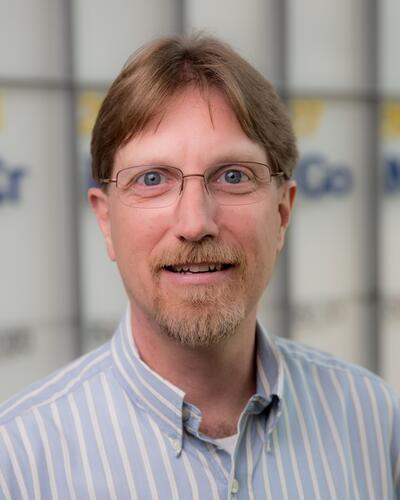
Eric Helms has been a member of the Geneseo faculty since 2001. He was awarded the Chancellor's Award for Excellence in Teaching in 2014.
Fall 2024 Office Hours
Mon 2:00p-5:00p
Thurs 2:00p-5:00p
or just drop me an email and we will work to set up a time to meet outside of those hours.
Classes
-
CHEM 100: Chem First Year Experience
This course serves as an introduction to the chemistry and biochemistry programs at Geneseo and is intended for those considering a chemistry or biochemistry major. Topics include career opportunities, the literature of the chemist and biochemist, research opportunities, software used in the chemistry curriculum, and strategies for success.
-
CHEM 211: Organic Chemistry I
An introduction to modern organic chemistry using a functional group approach. Topics include structure/reactivity relationships, reaction mechanisms, stereochemistry, and spectroscopy.
-
CHEM 290: Chemistry Research
This course provides an opportunity for students to engage in an exploratory laboratory research experience with a Chemistry Department faculty member. Research positions are arranged by consultation with the course instructor, faculty mentor, and student. A learning agreement and permission of instructor is required for class registration; use the link in section notes to submit a permission request. May be repeated for credit without exceeding a maximum of 4 credits. This course is graded on an S/U basis and cannot count toward the major.
-
CHEM 490: Advanced Chemistry Research
An individual, student-led, advanced laboratory research experience with a Chemistry Department faculty member. Working with a faculty mentor, students design, perform, and analyze the results of a laboratory experiment. Students submit a written laboratory report that conforms to American Chemical Society Guidelines and a self-reflection about their experience. A learning agreement and permission of instructor is required for class registration. Use the link in section notes to submit a permission request.
- NEUR 488: Exp: Science of Cannabis
Curriculum Vitae
Education
Ph.D., University of Texas at Austin, Austin, Texas
B.S., Rockford College, Rockford, Illinois
Publications
Coffey, J. M., Vadas, A., Puleo, Y., Lewis, K., Pirone, G., Rudolf, H.L., Helms, E.D., Wood, T. D., and Flynn- Charlebois, A.; “Synthesis and Characterization of a Deuterium-Labeled Stercobilin: A Potential Biomarker for Autism”, Journal of Labelled Compounds and Radiopharmaceuticals, 2018; 14 May, 1–7. https://doi.org/10.1002/jlcr.3629
Hilimire, Thomas; Chamberlain, Jeffrey; Anokhina, Viktoriya; Bennett, Ryan; Swart, Oliver; Myers, Jason; Ashton, John; Stewart, Ryan; Gates, Kathleen; Featherston, Aaron; Helms, Eric; Smith, Harold; Dewhurst, Stephen; Miller, Benjamin; “HIV-1 Frameshift RNA-Targeted Triazoles Inhibit Propagation of Replication-Competent and Multi Drug-Resistant HIV in Human Cells”, Publication Date (Web): April 27, 2017 (Articles) DOI: 10.1021/acschembio.7b00052.
Best, Katherine T., Li, Diana, Helms, Eric D.; “Molecular Modeling of an Electrophilic Addition Reaction with ‘Unexpected’ Regiochemisty” The Journal of Chemical Education, 2017, 94(7), 936 – 940. DOI: 10.1021/acs.jchemed.6b00488. Publication Date (Web) April 27, 2017.
Hilimire TA, Bennett RP, Stewart RA, Garcia-Miranda P, Blume A, Becker J, Sherer N, Helms ED, Butcher SE, Smith HC, Miller BL.; “N-Methylation as a Strategy for Enhancing the Affinity and Selectivity of RNA-binding Peptides: Application to the HIV-1 Frameshift-Stimulating RNA”; ACS Chemical Biology, 2016, 11(1), 88 – 94.
Swoger, Bonnie J.M..; Helms, E.; “An Organic Chemistry Exercise in Information Literacy Using SciFinder”; Journal of Chemical Education, 2015, 92 (4), 668–671.
Arpaia, N.; Widener, M.; Helms, E.; "Assigning the NMR Spectrum of Glycidol: An Advanced Organic Chemistry Exercise"; Journal of Chemical Education, 2007, 84(8), 1328 - 1330.
Odenbaugh, Amy L. , Helms, Eric D., Iverson, Brent L.; "An Investigation of Antibody Acyl Hydrolysis Catalysis Using a Large Set of Related Haptens"; Bioorganic and Medicinal Chemistry, 2000, 8, 413-426.
Shreder, K., Thomas, R., Wallace, M., Helms, E., Iverson, B.; "Evolution of Catalytic Activity throughout a Polyclonal Immune Response Elicited by a Transition-State-Analog Hapten."; Isr. J. Chem., 1996, 36, 215-220.
Interests
Research Interests
Developing green synthetic pathways, utilizing bio-derived and bio-degradable solvents, with an eye toward producing useful molecules without petroleum-derived solvents.
Personal Interests
- Bioorganic Chemistry, Natural Products Chemistry, Green Chemistry, Functional Foods