

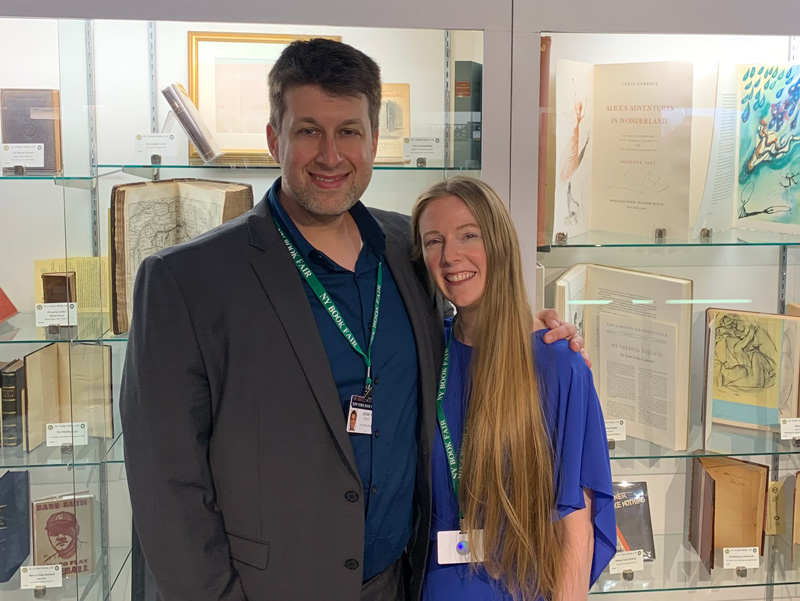
Joshua Mann ’03 and Sunday Steinkirchner ’03 (Photo provided)
The rare book world reacted with joy and wonder in April 2026 when a trove of original Keats letters, missing for decades, was recovered by the Manhattan District Attorney’s Office. But behind the scenes, persevering to ensure that recovery happened, were SUNY Geneseo alums and antiquarian booksellers Sunday Steinkirchner ’03 and Joshua Mann ’03.
This is their story.
The Man and the Book
In January 2025, a man walked into B&B Rare Books in New York City with a suitcase full of old books to sell.
That may not sound unusual to anyone hoping to consign a few items for sale. But for rare and valuable books, it’s suspicious.
“Showing up without an appointment, with books in a suitcase or backpack, not well wrapped, not taken care of—those are red flags,” said Steinkirchner, who co-owns B&B with Mann.
Steinkirchner’s and Mann’s wariness is understandable—buying possibly stolen material is very bad for business. When someone can’t clearly demonstrate ownership of the books they wish to sell, B&B usually takes a pass.
But then they saw the Keats.
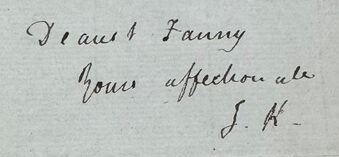
An 1878 edition of Keats’ Letters to Fanny Brawne, leather-bound, gilt-edged, compellingly beautiful. The cover was eye-catching—but the inside was gobsmacking. Attached to pages bound into the book were eight of Keats’s original letters.
Originals. Actual letters handwritten by Keats.
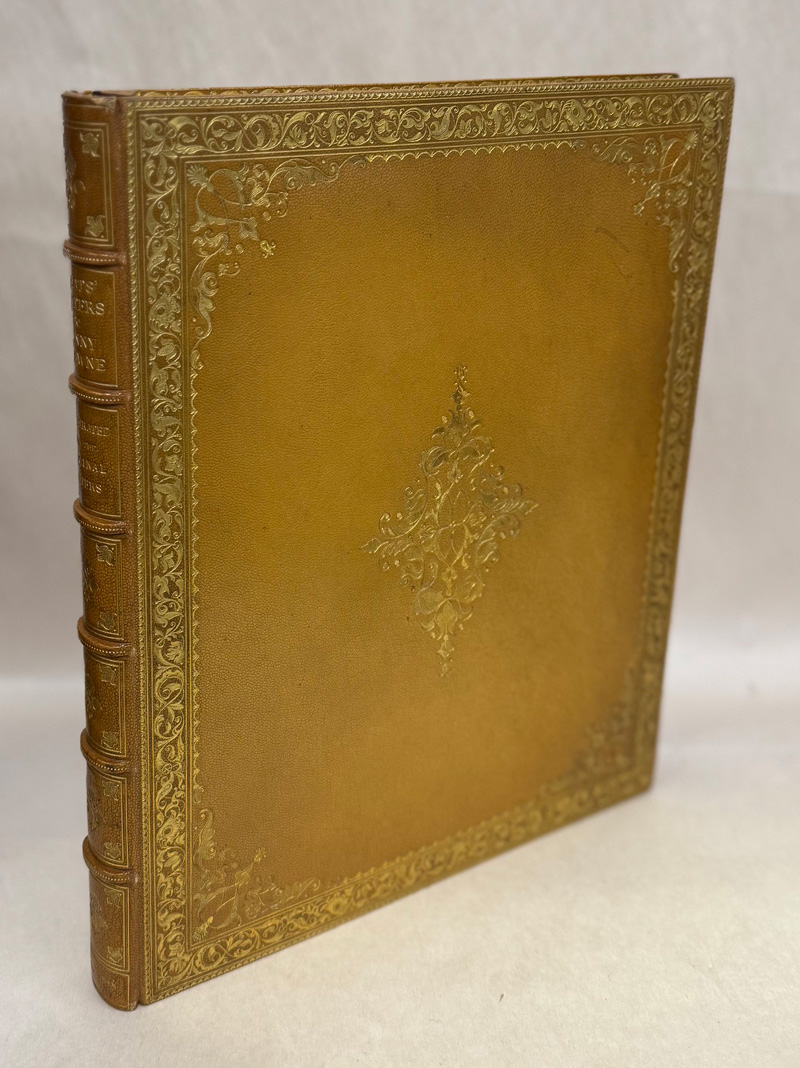
The 19th-century Romantic poet John Keats is one of the best-known writers in the English language. Among his revered works are the 37 love letters he wrote to his fiancée Fanny Brawne before dying of tuberculosis in 1820 at the heartbreakingly young age of 25. In the almost 150 years since their first publication, the letters, brimming with passion and poetry, have never been out of print.
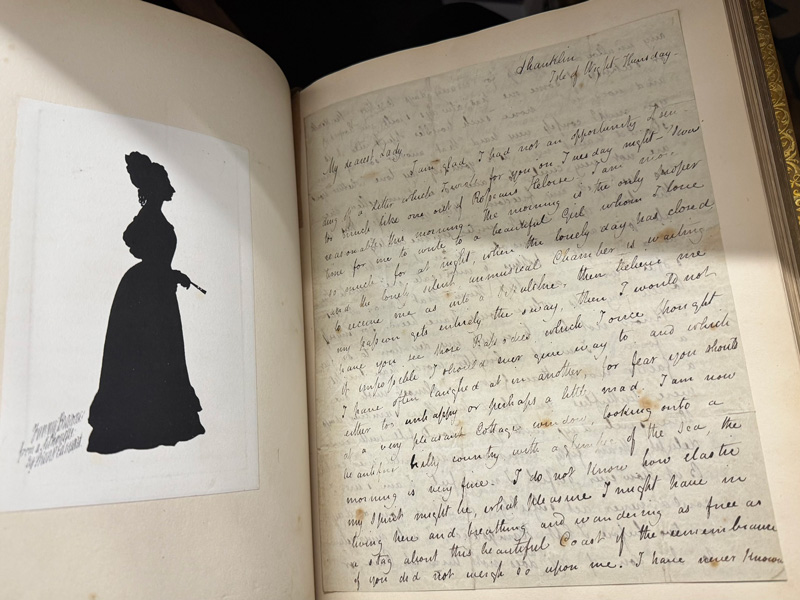
And now eight of those original letters were—astonishingly—sitting on the counter at B&B.
“Honestly, I can’t think of a single thing that could have walked in the store that would have been more personally meaningful to me,” said Steinkirchner. “I love Keats. I reread his letters to Fanny Brawne every few years. Whenever we go to London, we also go to Old Brompton Cemetery to say hi to Fanny. This was the most amazing item I’d ever handled.”
But Where Did It Come From?
The man said he had inherited the book from his grandfather. Again, that sounds reasonable to the layman. But again, it raised the eyebrows of the booksellers.
“Books like this Keats get passed down through generations, and they’re well documented,” explained Steinkirchner. The history, or provenance, of any incredibly rare book is known, and it can be verified with paperwork. “It’s not, ‘I don’t know where my grandfather got them.’ That just doesn’t happen.”
Steinkirchner and Mann knew the Keats—and probably the other books in the suitcase—was stolen. They knew the man was unaware of the Keats letters’ true value. And they knew if they let the book leave the store, it would be lost.
Unnerved, the pair managed to convince the man to leave the books, enticing him with the possibility of higher sale prices if they were able to assess them properly.
And then they scrambled to learn more.
Who Is Missing Keats Letters?
In the whole world, only 37 letters from Keats to Brawne exist. Why were eight of them together? And most importantly, why did no one seem to know that they were missing?
Operating on the assumption the book was stolen, Mann and Steinkirchner began looking for proof. They checked an international online database of stolen books, a common first step for booksellers. Nothing. They called police precincts, looking for reports of stolen goods. Also nothing.
Night after night, Steinkirchner spent hours tracking the provenance of all 37 letters, building her own database of where each had gone since they were originally sold in the 19th century. No one could say for certain where these eight letters had been or were now.
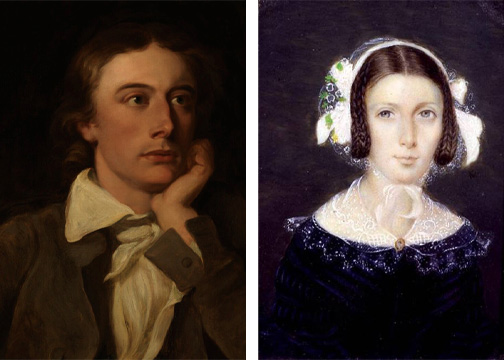
Right: Miniature portrait of Fanny Brawne, public domain, via Wikipedia Commons
The rare book world is a small one, though, and Steinkirchner’s midnight emails to bookselling sources and special collections librarians started to arouse suspicion. Susan Wolfson, Keats scholar and English professor at Princeton University, said she doubted the letters were real—because, frankly, their discovery was highly improbable.
Steinkirchner and Mann, trusting their own assessment, brought the book to Wolfson, who had spent her professional life studying Keats’s letters. She was instantly convinced, later describing the letters to the New York Times as “the literary find of a lifetime.”
“I almost wish we were butterflies and liv’d but three summer days—three such days with you I could fill with more delight than fifty common years could ever contain …”
Vigilante Justice
As gratifying as it was to have Wolfson authenticate the letters, Steinkirchner and Mann still couldn’t prove they were stolen. For a month, they had evaded the man, trying to buy more time while not revealing the Keats book’s immense value.
“All the police precincts told us if he wants the book back, you have to give it to him,” said Steinkirchner. “You can’t prove it’s stolen. There’s no vigilante justice here—you can’t just keep it.”
And yet, when the man finally demanded the book, Mann and Steinkirchner resolutely refused.
“We were doing what we believed was the right thing, protecting something that’s one of a kind and finding the owner,” Steinkirchner explained. “I didn’t care what would happen, if someone was going to sue us or arrest us. To me, it was worth it.”
So that’s what the man did. He sued them.
Things looked bad, legally: Steinkirchner and Mann had no proof of theft with which to defend their actions. As time was running out, an auction house specialist in art and books happened to tell Mann about the Art Loss Registry, a worldwide database for stolen art, though not one commonly consulted by booksellers.
Desperate, Mann paid £400 for a single registry search on the one book. At 4 a.m. on the very day they were scheduled to appear in court, Mann received an email containing a redacted Nassau County police report from 1989 … and it listed the Keats book.
They had their proof.
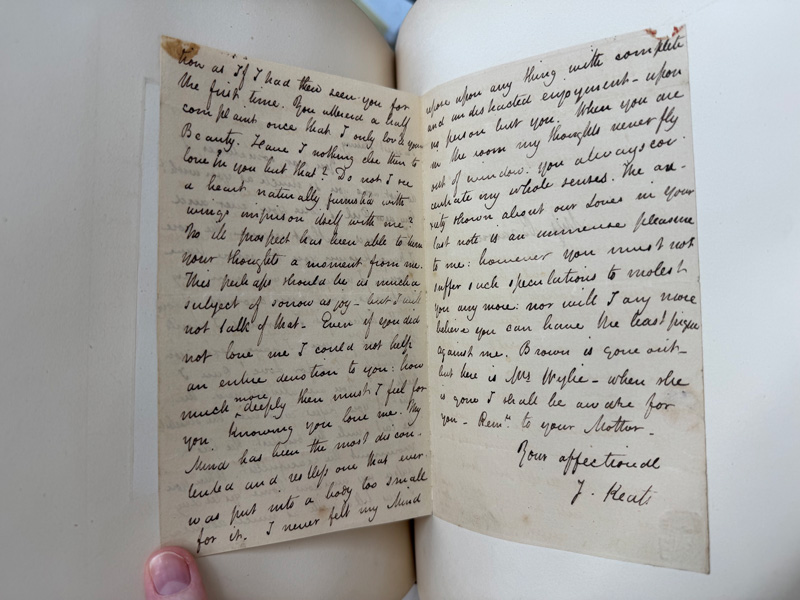
“You uttered a half complaint once that I only lov’d your Beauty. Have I nothing else then to love in you but that? Do not I see a heart naturally furnish’d with wings imprison itself with me? No ill prospect has been able to turn your thoughts a moment from me.”
“I’ve Been Looking for You”
Stolen art has its own law enforcement protocol, and the Antiques Trafficking Unit in the Manhattan District Attorney’s office opened an investigation. The Keats and 16 other books were seized by the DA’s office and identified as having been stolen from the Whitney estate on Long Island sometime in the 1980s.
Steinkirchner and Mann were forbidden to talk about the official investigation until April 2026, when the DA’s office invited them to the press conference (watch video) where the books were returned to Whitney descendants.
After the weeks of sleepless nights tracking the book’s ownership records, after the lawsuit threatening B&B’s reputation and expertise, after the steadfast efforts to honor the book’s cultural value and prevent it from being lost yet again—after all they had been through, Steinkirchner wanted to connect with the owner, and she took the opportunity at the press conference to introduce herself to the Whitney heir.
“I’ve been looking for you,” she told him. “I didn’t know who you were, but I’ve been looking for you. We found your book.”
Epilogue
The New York Times, Times of London, Newsday, The Guardian, Financial Times, BBC, Canadian BBC—eventually about 30 stories about the discovery of John Keats’s letters to Fanny Brawne ran in news media from around the world.
In June 2026, Sotheby’s sold the Keats book for the Whitney estate for just under $1.8 million, calling the letters “a monument of a brief life lived with intense passion.”
The owners of B&B Rare Books know they safeguarded a piece of literary history.
“We were the stewards of this book,” said Steinkirchner. “We’re forever a part of its story, whether people know it or not.”
Author
Robyn Rime
Interim Executive Director of Content Strategy
rime@geneseo.edu
More Stories

Longtime Rochester Anchor Norma Holland ’97 Appointed to SUNY Geneseo’s College Council
SUNY Geneseo Celebrates Inauguration of President Melinda D. Treadwell

Alum Helps Choose US Postage Stamps
Student Researchers Dig into Ancient Extinctions
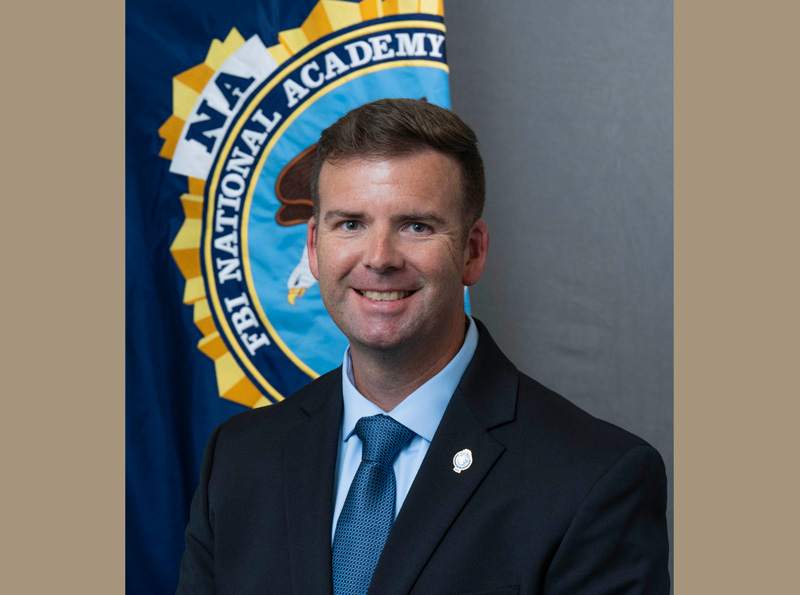
UPD Lt. Phelps Completes FBI Program

Biology Professor Earns $228K Grant for STEM Teaching

Education Professor Awarded Grant to Advance STEM Learning Through Bike Engineering and Design