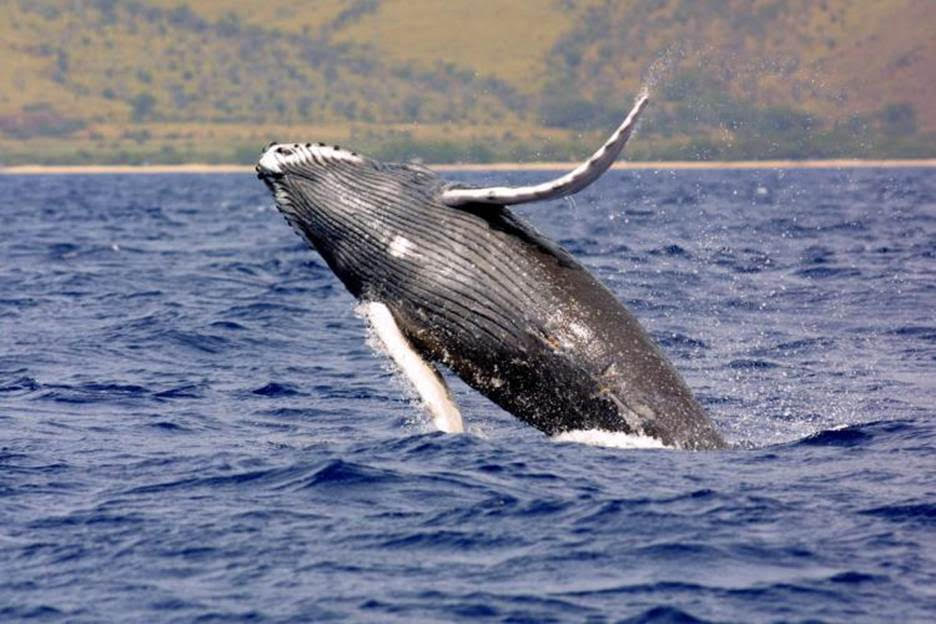
Today’s featured whale is the humpback whale, gentle giants known for their ability to jump their 40-ton bodies out of the sea in incredible breaching behavior and their beautiful, distinctive songs.
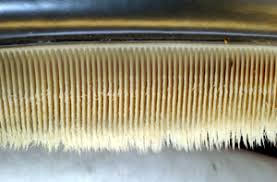
Whales and dolphins belong to a group of marine mammals known as cetaceans. Cetaceans are categorized by their feeding structures. Some whales have teeth, like sperm whales, orcas, and dolphins. Other whales filter feed on plankton using comb-like structures called baleen. Humpback whales have hundreds of fringed baleen plates, each about 30 inches long, that allow them to filter immense volumes of water for krill and small fishes.
Baleen whales like blue, gray, minke, fin, and humpback whales use bristled baleen plates to filter feed. NOAA Fisheries.
Humpback whales make the most of each gulp. Sometimes, they will swim under a school of small fish, blowing a net made of bubbles blow bubbles underwater. Then, they will rise to the surface with open mouths, engulfing the school in one mouthful!
Each year, humpback whales make amazing migrations, travelling up to 5000 miles to feed in the nutrient-rich, high-latitude waters in the summer, then to warmer waters to breed. Humpback whales can even make the 3000-mile swim from Alaska to Hawaiʻi in less than a month!
Read more about humpback whales and conservation in this resource from NOAA. Join us at the whale to learn more and to make your own climate action plan.
Whales and other marine species journey across seas, crossing nations and international waters. Although we may give ocean basins different names, these waters are connected, and effective conservation benefits from international collaboration and policy.
Keep the whale of a time going! As we close the festival with tonight’s 8 pm dance party at the whale, you’re invited to continue to find and share your own whale and nature facts with any and all you meet. Here are a few places to start!