

Whale of the Day 3/9: Orca Whale
Today’s featured whale is the orca whale, which are actually the largest members of the dolphin family, Delphinidae.
These highly social whales live in maternally related pods of a few to twenty or more individuals. Orcas are also one of the only animals besides humans to undergo menopause, living decades after they stop reproducing around age forty.
Orca pods use specific calls to communicate, with different populations around the world using their own dialects and cultural behaviors. They often hunt collaboratively, even working together to knock prey off of sea ice!
Like many marine species, orcas face conservation threats today. Contaminants from wastewater and other sources accumulate in high concentrations in these whales that are at the top of the food web, harming orca reproduction and health. Protecting orcas and other sea life requires action to prevent pollution in marine habitats.
Read more about orca whales and conservation in this resource from NOAA. Join us at the whale to learn more and to make your own climate action plan.
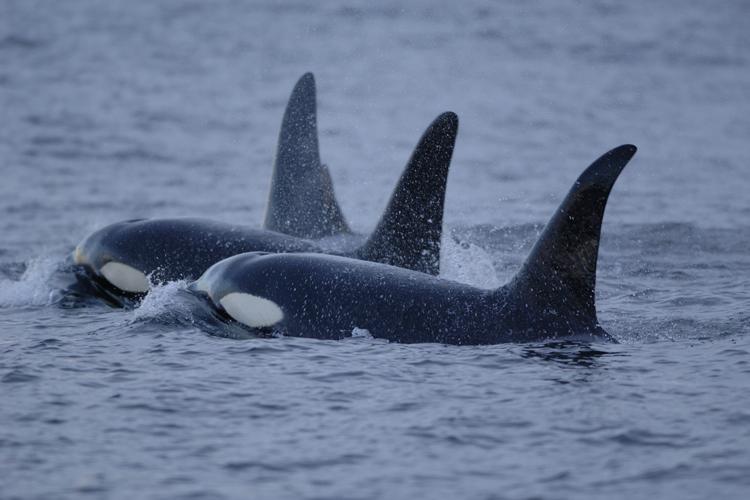
Orcinus orca. Orcas have unique gray marks known as saddle patches behind their dorsal fins. Every orca has their own unique marking, allowing scientists to track individuals from photographs.