

Veteran Employment @ SUNY Geneseo
SUNY Geneseo values the diverse perspectives and experiences that our Veteran employees bring to our community.
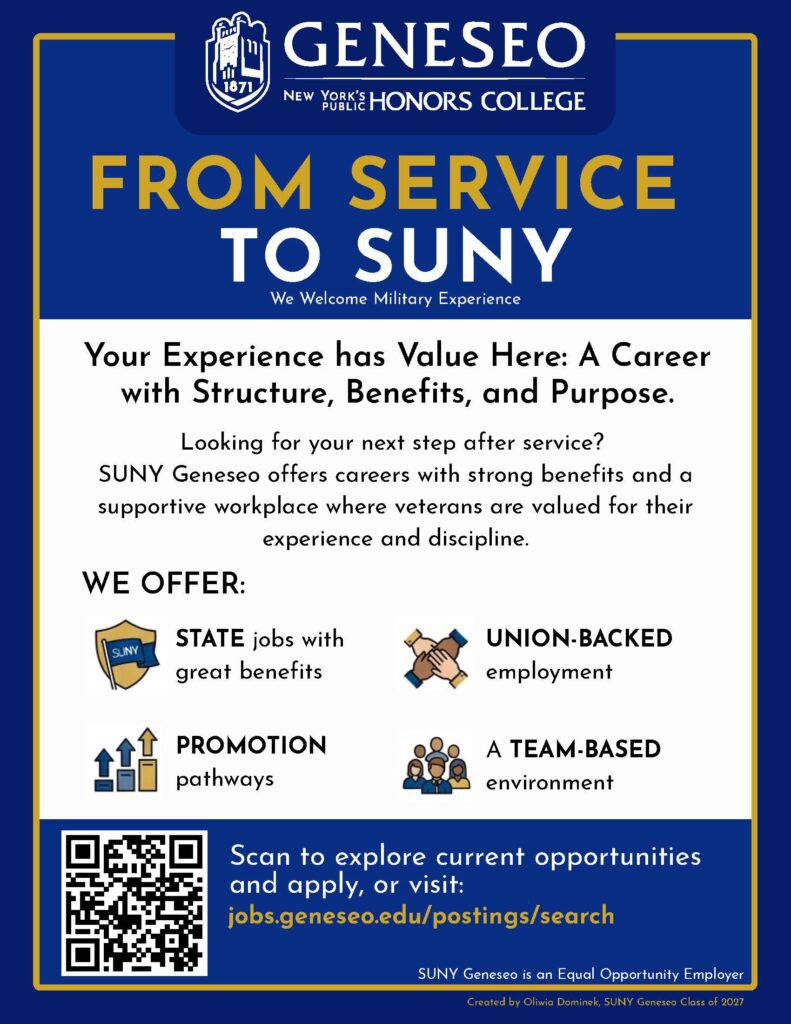
Below, you’ll find testimonials from current Veterans working on campus. They spent time with intern Oliwia Dominek, Class of ’27, sharing about their military experience and what brought them to SUNY Geneseo.
“For the most part, where I’ve had the most enjoyment, no matter how big or small, it’s always been something with service. I like the purpose and the performance of it.” — Shane Abbott, Supervising Janitor & Navy Veteran
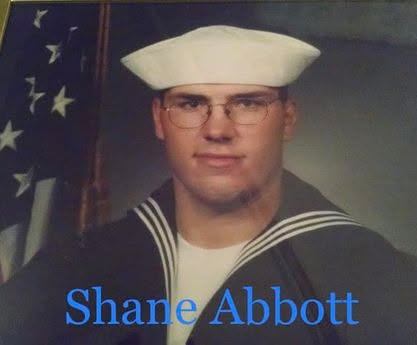
Sitting down with Shane, it quickly becomes clear how central he is to campus operations. As a Supervising Janitor in Custodial Services, he has kept Geneseo running smoothly for over two decades under a simple motto on his wall: ‘Work hard, Be kind, and Amazing things will happen.’ Before his time on campus, Shane joined the Navy straight out of high school as a Gunner’s Mate (GM), focusing heavily on damage control and emergency repairs under pressure. The military gave him a chance to see the world, build an unshakable work ethic, and develop the emotional composure that still defines him today.
He laughs when recalling a basic training lesson about situational awareness, when he briefly stepped away from his bunk and left his locker unlocked. “I got a little ding for it,” Shane said, “but it taught me to pay attention to my surroundings. Even now, I stay calm and focused no matter what’s going on.” That composure stayed with him after the Navy, through a few years in factory work, and ultimately to Geneseo when his mother told him about an open cleaner position. Over the next twenty years, he worked his way up to supervisor, carrying those lessons with him.
Having spent his life naturally drawn to roles where he gets to help others, Shane channels his background into a deeply supportive leadership style. While you might expect someone with Navy training to be a rigid boss, he focuses entirely on helping his team succeed. He leads strictly by example, refusing to sit behind a screen. “I still like to get my hands dirty,” he explained. “Because I’m still a coworker. I have my role, but I’m still an employee.” He takes pride in treating his staff like people and connecting with them on a human level.
Beyond managing complex campus event setups, the structure of state service has allowed Shane to build a balanced lifestyle. He gets quality time at home and rarely misses his kids’ after-school activities. The university provides a supportive environment and a focus on work-life balance that the demanding private sector often lacks, letting him focus entirely on his family when his workday ends.
For young veterans debating between the private and public sectors, Shane’s advice is straightforward: look for state service and seize the opportunity. “Once your foot is in the door, everything can take place after that,” Shane shared. “It offers great benefits, and there are always options to grow or transfer into other areas. It gives you everything you could be looking for.”
“In the long run, working here completely outweighs the private sector because I have more time with my family. All around, this is just an easier, better lifestyle.” –– Kyle Deleo, Trades Generalist & Army Veteran
When I sat down with Kyle, I gained a new perspective on the physical demands many veterans face both during and after military service. Before coming to SUNY Geneseo, Kyle served as an Army engineer doing heavy-lift work like bridge building, route clearance, and demolition.
After leaving the military in 2016, he entered the civilian workforce and quickly found himself in physically demanding roles. Kyle lives with lasting limitations from his service, so that level of constant strain just wasn’t something he could sustain. He began looking for a more balanced career path and found it in Geneseo’s Facilities Services department as a Trades Generalist in May of 2025.
The most valuable thing Kyle gained was time with his family. Through CSEA union benefits, his generous vacation and sick leave let him actually be a present dad. He doesn’t have to miss a school event or skip coaching his kids’ sports teams because he’s stuck on a 12-hour factory shift. Even on the hardest days on campus, the university is incredibly reasonable with expectations and supportive of his health and well-being.
Another theme that stood out during the interview was Geneseo’s investment in employee development. The university doesn’t just encourage training; it actively invests in it so employees can earn valuable skills without paying out of pocket. In just one year, Geneseo covered the entire cost for Kyle to get certified in high-voltage electrical, carpentry, HVAC, and asbestos handling.
Kyle mentioned that many veterans chase private-sector pay before realizing it often costs them their work-life balance. Geneseo offers a different path: great benefits and true peace of mind. “Coming out of the military, this is a job I truly enjoy because it’s rewarding and straightforward,” Kyle shared. “Compared to what I used to do, it’s the least straining job I’ve had, and the positive well outweighs the cons.” For Kyle, the university has become the rewarding home base he was always meant to find.
“When you work as a team, you can accomplish so many things. Veterans understand this probably better than anyone else, and they make great coworkers because of it.” — Tim Finnigan, Service Desk Supervisor & Army Veteran
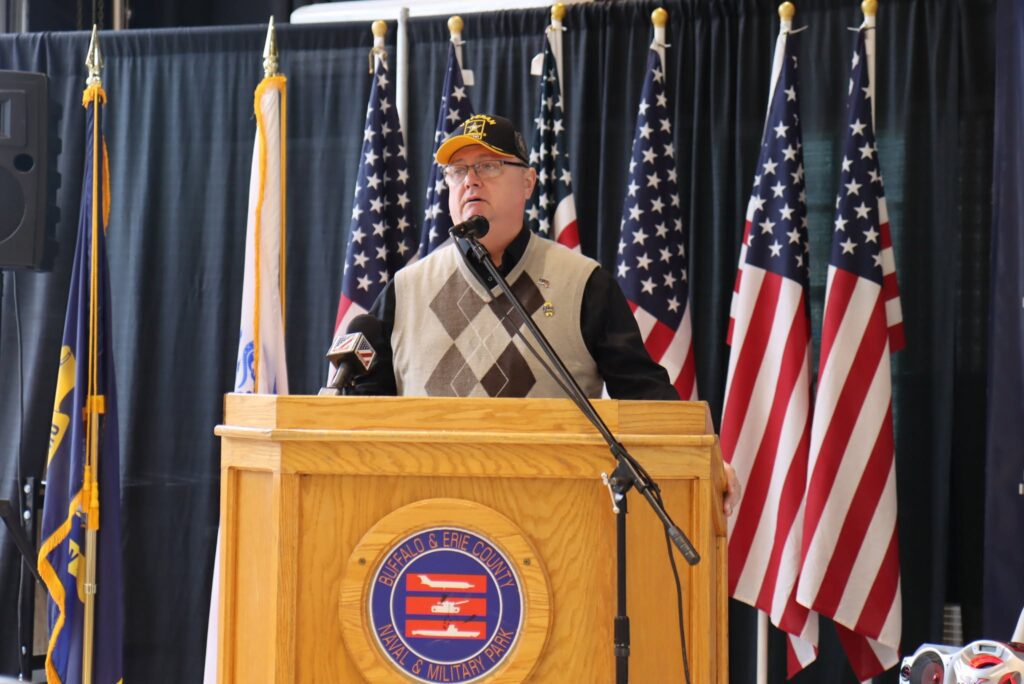
When I sat down with Tim in the newly renovated Milne Library, it quickly became clear how connected he is to campus. Tim has been working at SUNY Geneseo since 1994, serving as the service desk supervisor, where he manages student workers and plays an important role in supporting daily student life. Before joining the Geneseo team, Tim served nearly ten years in the Army as a personnel records specialist, including assignments in Maryland and Germany, before finishing his service in recruiting. After leaving the military in 1989, Tim spent a few years in the private sector.
In 1994 his wife gave him some straightforward advice: “My wife said, ‘You need to get into the state system,'” Tim laughed. “And I don’t argue with her.” Taking that leap turned out to be the best move he could have made. The state system offered the exact foundation he needed: a high-quality medical program, a solid salary base, and a reliable retirement plan. For Tim, the organized environment felt familiar coming from a military background. The clear path for professional progression and the comprehensive benefits package reminded him of his service, allowing him to grow, build a career, and plan confidently for the future.
Tim believes that organization and teamwork is one of the key strengths veterans bring to campus environments. “In the military, you’re taught to work as a unit, together,” Tim explained. “Veterans bring that collaborative mindset to the workplace every day.” This deep dedication to community and looking out for one another is also why Tim serves as a CSEA union representative, actively reminding members that their strength comes from working together and using their collective voice.
When asked what has kept him at Geneseo for over 30 years, Tim will tell you right away that it’s the people. Over the decades, he has become a lifelong mentor, staying connected with former students on social media to celebrate their milestones and helping countless others navigate rough patches to cross the graduation stage. “For me, that just hits home,” Tim said. “Every student that walks through that door is just one step away from being successful. Seeing them grow and get past adversity is what keeps me fulfilled.”
Tim’s advice for veterans considering their next step is simple: look beyond short-term private-sector opportunities and focus on peace of mind and long-term career security. “If you can put in the time,” Tim shared, “the state system offers the kind of comprehensive benefits, community, and comfort that so many people are looking for.”
“If you want to know how things work, how to maintain them, and how to improve them more efficiently with less environmental impact – this is the place to be.” –– Steve Schunk, Energy Specialist & Coast Guard Veteran
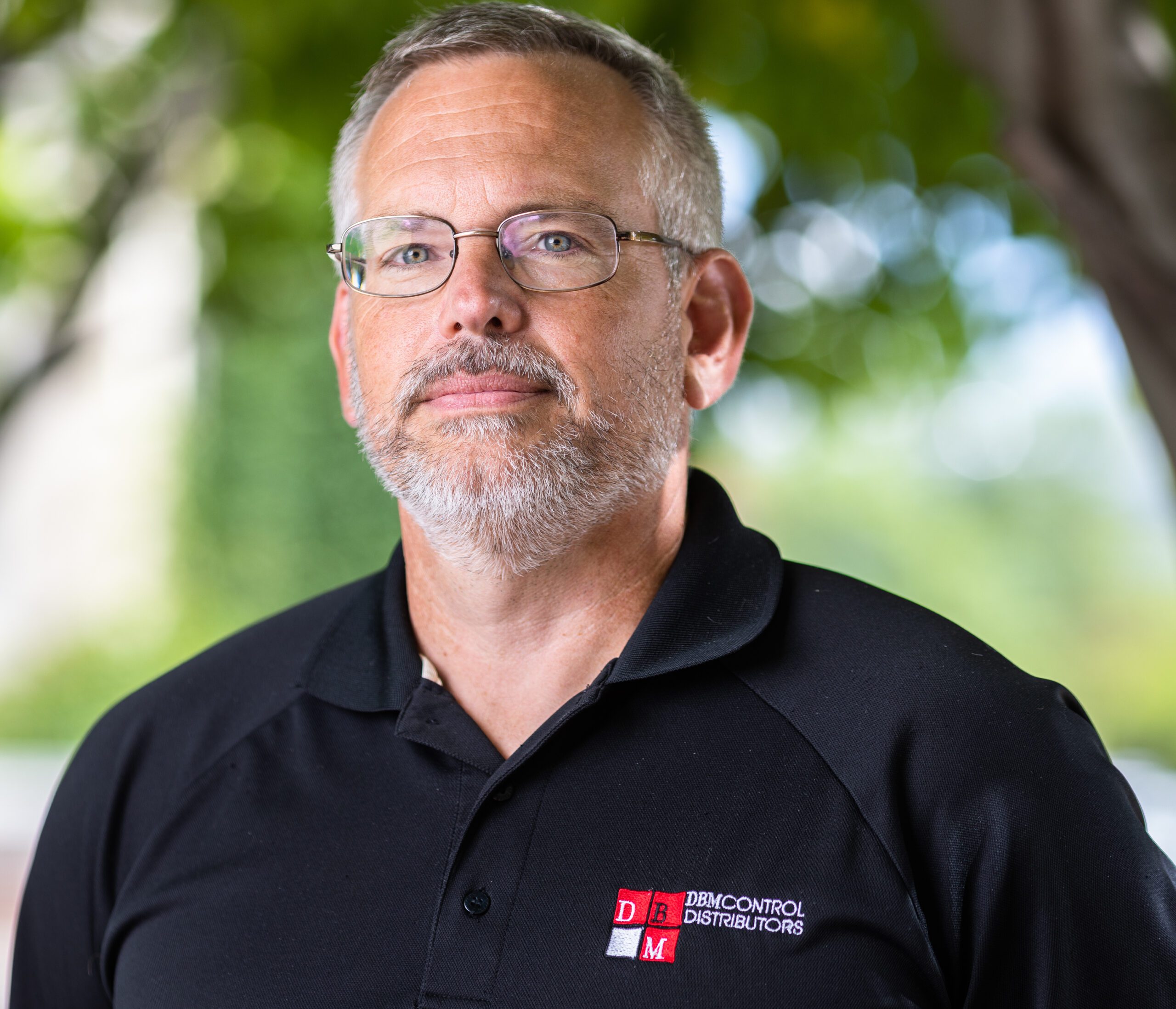
Sitting down with Steve, it quickly becomes clear that his role is crucial to supporting SUNY Geneseo’s sustainability efforts. As the campus Energy Specialist, he leads clean energy master planning, monitors utility systems, and oversees efficiency upgrades across buildings. His path began in 1993 with a four-year enlistment in the Coast Guard as a Machinery Technician aboard a 378-foot cutter. Operating under pressure in heavy mechanical spaces, he built a deep understanding of complex, large-scale systems – a technical foundation that now drives his work reducing the university’s environmental footprint.
Using his GI Bill, he enrolled in an HVAC program in Chicago and applied to Geneseo for summer work. His application landed at the campus heating plant, where they were looking for a utilities assistant. Though set on moving to Illinois, he agreed to a tour and that tour changed his plans. “When they took me out and showed me the plant, I was like, ‘Man, this is cool. I want to do this,’” Steve says. He canceled his move to Chicago on the spot, noting, “Without the military, I probably wouldn’t have gotten the job here. I wouldn’t have had the experience to handle the task.”
Over the last 29 years, Steve has guided Geneseo through technological evolutions focused on sustainability. When he started in 1997, the campus relied on heavy bunker oil for heat, and he helped oversee the transition to cleaner natural gas. Today, he coordinates the progress toward Geneseo’s long-term goal of full electrification. Through the Clean Energy Master Plans he co-authored in 2016 and 2024, these environmental modernization projects have successfully saved the university nearly $1 million in electric costs and reduced natural gas expenses by $300,000.
Despite nearly three decades handling this critical green infrastructure, what keeps Steve at Geneseo is the community. He describes the facilities team as small but resourceful, emphasizing the importance of hands-on work in keeping the campus running. That focus on human capability also makes him protective of critical thinking in an era of growing automation. “AI is like a box of donuts – You’ll eat the whole thing if you don’t discipline yourself,” Steve laughs, warning that technology should simplify tasks, not replace cognitive problem-solving. For veterans exiting the service, his advice is to lean entirely into that hands-on, adaptive mindset. “It’s not about memorization,” he says. “It’s about knowing basic concepts and enhancing them as you go.”