

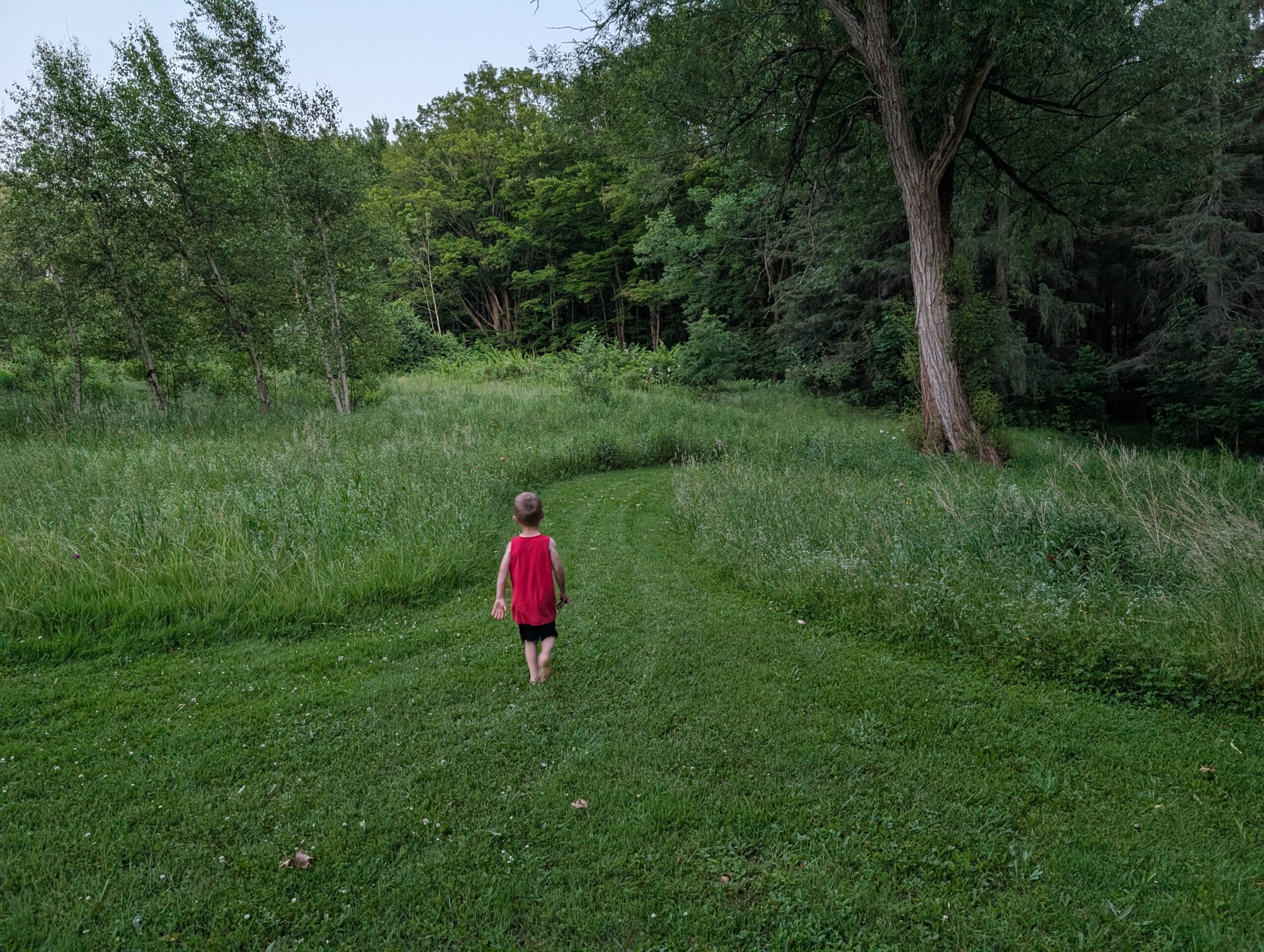
Rachel Lerner Chrostowski ’05 is among those who support wildlife and native species at home.
By Kris Dreessen
A few years ago, Rachel Lerner Chrostowski ’05 and her husband, David Chrostowski ’04, decided to mow less and bring more nature into the back yard of their rural home near Buffalo, NY.
They began by removing non-native species from the edges of their acre-plus property and also planted native trees. They also tilled a quarter-acre of their yard and planted wildflower seeds.
“By the second year, our seeded meadow was a field of yellow flowers. And now, we have the beautiful pink blooms of echinacea sticking out of that sea of yellow,” says Chrostowski. “With these changes, we’ve seen a lot more creatures around our property, because they rely on native plants. I love to go out in the morning and listen to the bird calls. Sometimes we hear woodpeckers and screech owls. My son gets to see and hear and learn all of this in his formative years. It’s kind of magical.”
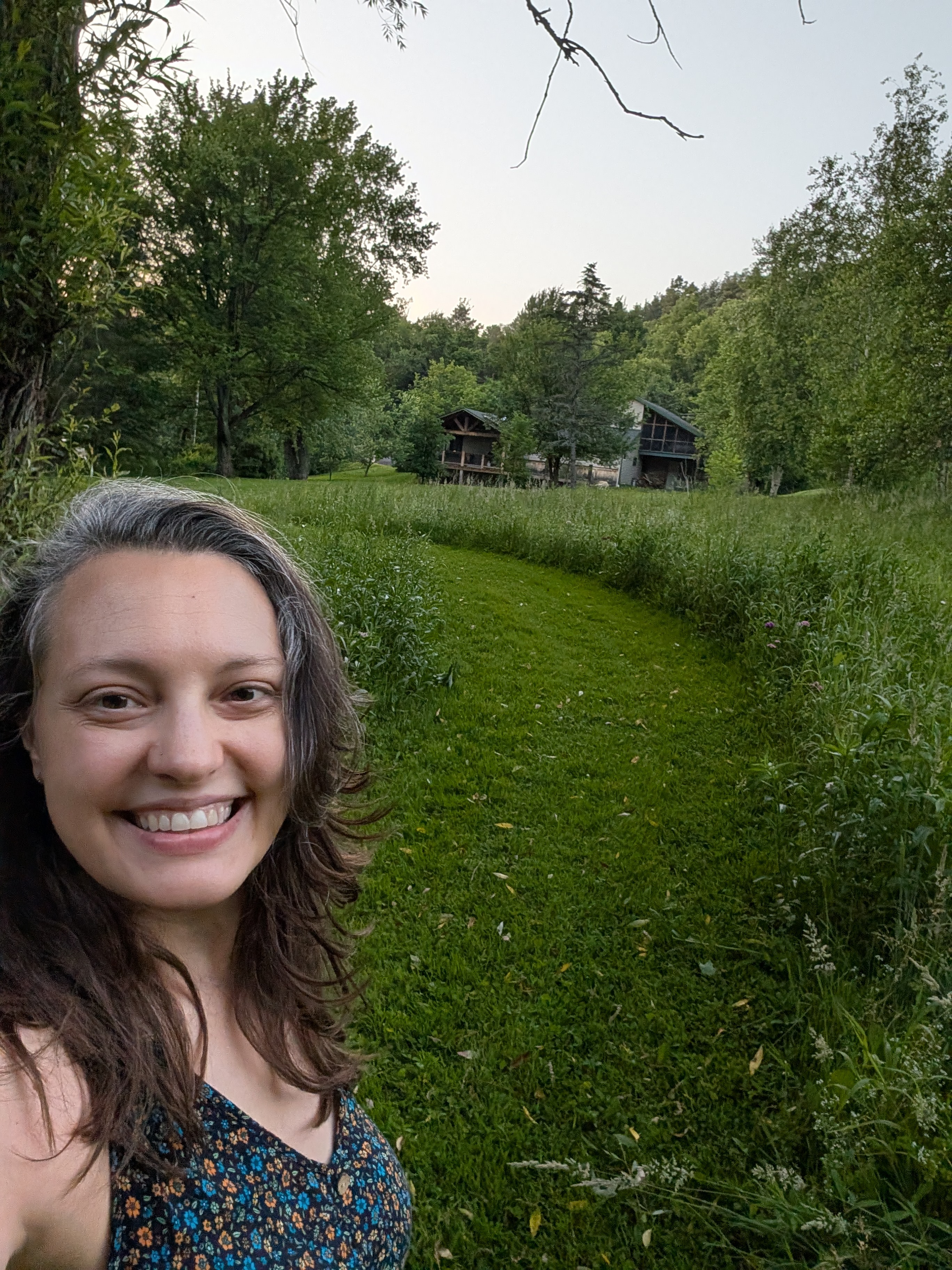
Chrostowski is the acquisitions director for the Western New York Land Conservancy, a not-for-profit organization that protects farm and natural land in the greater Buffalo and Western New York region. She understands that backyard habitats—however extensive or simple—are increasingly important as more land is developed and climate changes. According to the National Wildlife Federation, the North American bird population has decreased by 30 percent in the last 50 years, and 1 in 4 (25 percent) of North America’s native bee species are facing steep declines, and are at increased risk of extinction.
“Wildlife, as well as insects and foliage itself, rely on the plants and trees that typically grow in a region to survive,” says Jennifer Apple, associate professor of biology and chair of the Spencer J. Roemer Arboretum advisory board.
Apple and her students clear native gardens in the 25-acre, on-campus arboretum every June, preparing for alumni events at Reunion. They plant at the end of summer.
The College and Chrostowskis have larger areas to work with than most suburban yards, but there’s an opportunity to give nature a boost even with the smallest spaces.
Conservancy staff once transformed a 10 x 20-foot patch of grass into a thriving butterfly garden in downtown Buffalo, says Chrostowski. Growing the right plants in container gardens on a patio can also attract bees and other pollinators.
Tips to Boost Backyard Habitat
If you have a yard:
- Mow less. Allow some areas to grow to provide protection for deer, fox, birds, and other wildlife.
- Avoid pesticides or fertilizers with chemicals.
- Leave brush in small piles at the hedgerow or property edge. It provides habitat and protection in winter.
- Plant a variety of native species beneficial to wildlife. Milkweed, for example, is the only plant monarch butterflies lay their eggs on, so you can help boost their population as well.
- Leave the leaves. Don’t rake garden beds in the fall. The leaves provide protection for insects and other life during the winter and inhibit weed growth in spring.
- Install an insect or bee “hotel.” These can be purchased or homemade from materials such as plastic, wood, or found objects and provide the nooks and crannies in which insects live.
If you have a garden:
- Choose herbs such as basil, cilantro, mint, oregano, chives, and thyme. Their flowers attract bees.
- Transform a managed garden into a “meadow” of wildflowers for beauty that doesn’t need tending.
If you have a container garden:
- Plant bee-friendly flowers and herbs in pots. Zinnias, coneflowers, basil, and chives all attract bees.
If you don’t have outside space:
- Mount bird feeders designed specifically for windows (and watch the birds come right to you!).
*Source: The National Wildlife Federation
More resources:
Make your own bee/insect hotel
Make an insect hotel: Kid Friendly Construction
Get Backyard Habitat certified with the National Wildlife Federation and see what you need to know with this checklist.
Be a bee advocate
Milkweed for monarchs
Related content: Rachel works at the Western New York Land Trust. Meet fellow alumna Marisa Riggi ’09, to learn more about how nonprofits purchase farm and wild land to preserve open space.