

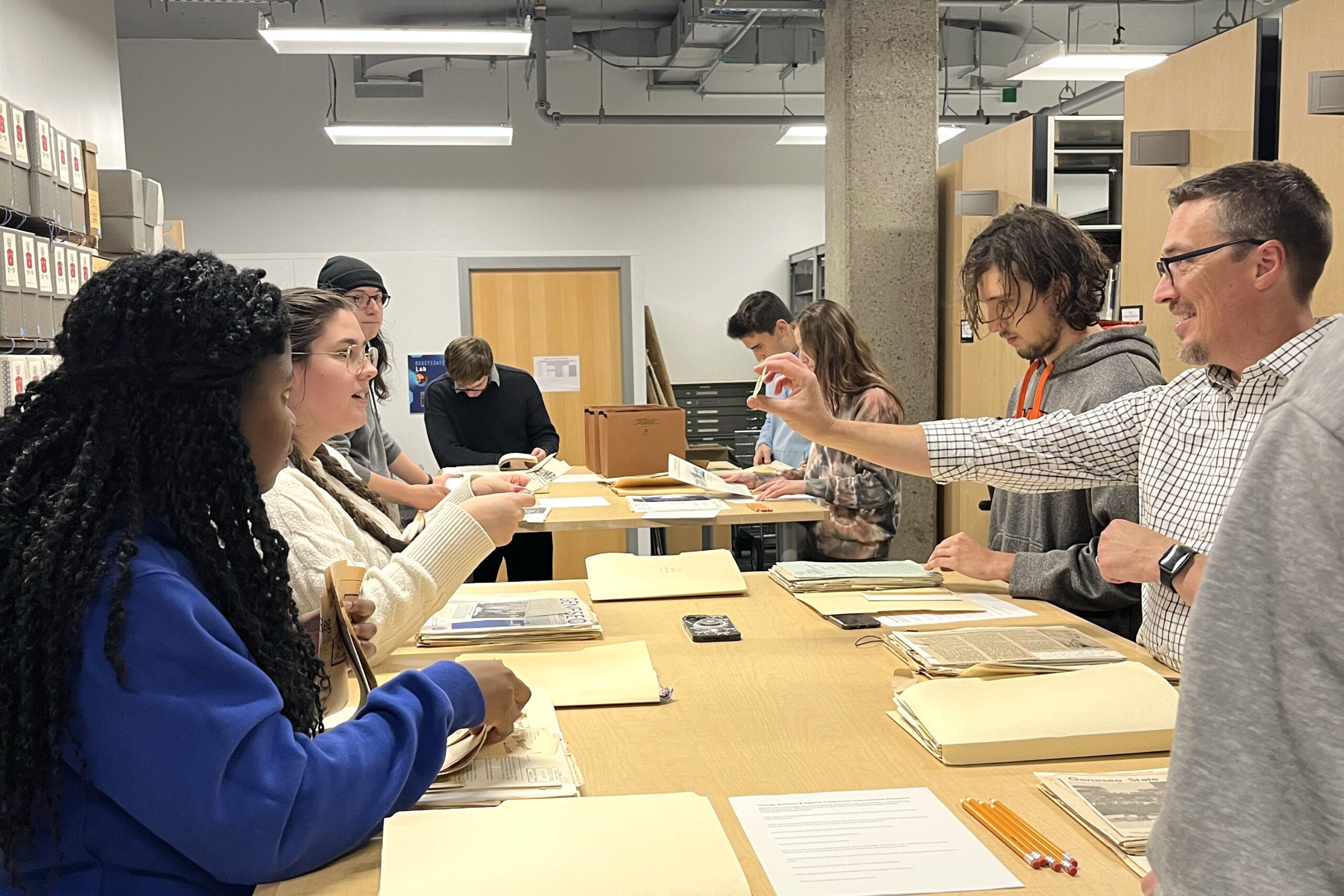
Justin Behrend (right), professor of history and graduate program director, works with students in the archives. (Photo Provided)
“A wonderful community of learning.” This description of the Master of Arts in History program rolls off the tongue of Justin Behrend, professor of history and graduate program director. It’s quickly proven accurate in talking with Behrend and with three students who will cross the stage this May as part of the program’s first cohort of graduates.
The program was designed with flexibility in mind, offering both full-time and part-time options. All classes currently meet in person, helping to foster connection among students and faculty—and all are held in the evening, to accommodate working professionals.
Geneseo undergraduates can accelerate their graduate work by beginning their master’s during their senior year and completing the degree in just one additional year of study.
Small seminars allow for what Behrend describes as “invigorating discussions,” diving deep into their topics and helping students make connections between the material and their own lives.
We want students to be thinking about their professional ambitions within courses, not just at the end of the degree program,”
Hillary Arinze ’26 MA thrives on these connections. “The graduate program is very interactive, with ideas flowing back and forth,” she says. “I’ve definitely found my community.”
In her undergraduate work in her native Nigeria, Arinze studied trade relations between Nigeria and the United States. She felt inspired to pursue a master’s degree and to consider options abroad. “A visiting professor encouraged me to look into the SUNY schools,” she says. “I ended up loving it here at Geneseo. It’s small, it’s cozy.”
The program provides advanced training in historical research, writing, and analysis while allowing students to shape their studies around clearly defined academic and professional goals.
“We want students to be thinking about their professional ambitions within courses, not just at the end of the degree program,” says Behrend. “In their final research projects, they can tailor not just the topic but the medium of their research, so that they can begin to build a portfolio.”
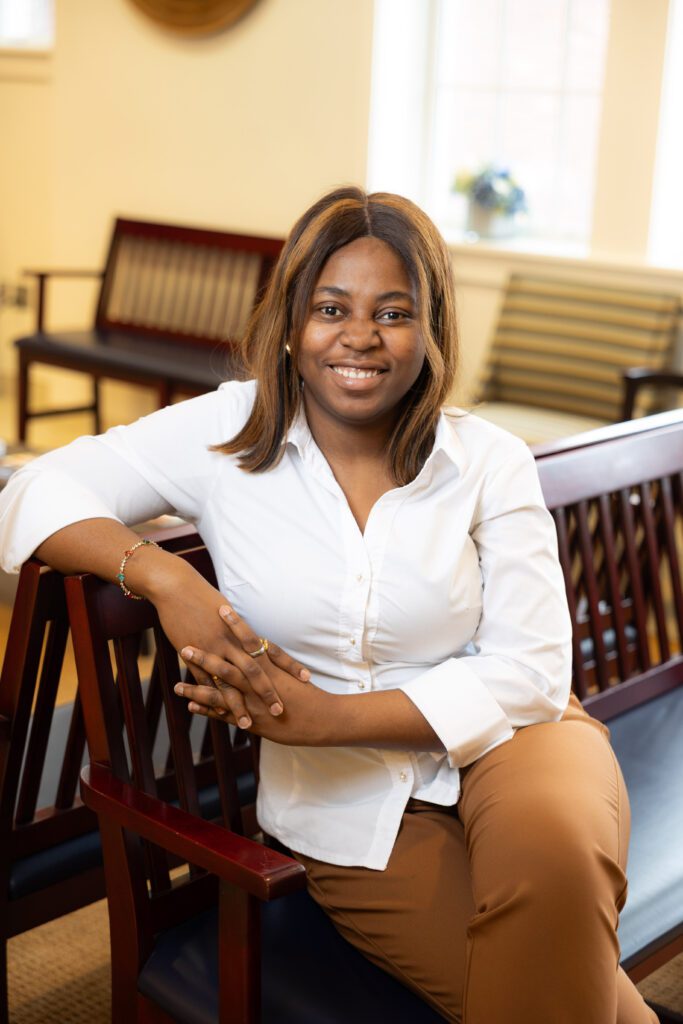
Arinze, for instance, is working on a directed study that will soon involve launching her own podcast. “I get credit for doing something I love!” she says.
Courses like HIST 601: Approaches to History, taught by Behrend, integrate career development into the curriculum. Students produce curricula vitae and cover letters, listen to podcasts on career paths, and research the myriad opportunities they could pursue with this degree. It was this course that led Jack Kirby ’23, ’26 MA to his current work in TRIO Student Support Services at Monroe Community College and to conduct research on the TRIO program in the National Archives in Washington, DC.
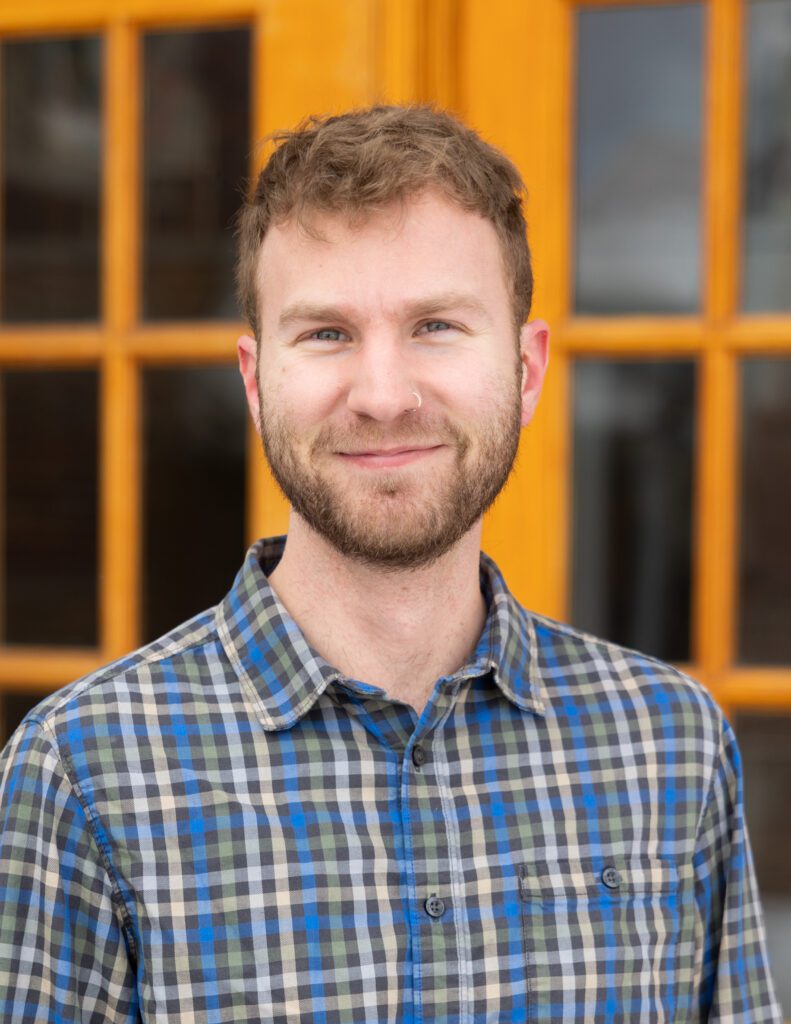
“A history degree prepares you for so many different kinds of jobs that it can be difficult to choose one to focus on,” he says. “The history MA program helped me realize that this job perfectly combines my passions for education and social justice.” He also credits the program for making him a strong job candidate. “Being able to communicate clearly and concisely has been the single biggest factor contributing to my career success. I have the MA program to thank for this.”
That same course led middle-school US history teacher Samantha Anderson ’22, ’26 MA, to discover that she also enjoys archival work. She interned in Milne Library’s Special Collections, cataloguing the belongings of the late Nona Schurman, professor emerita of dance—12 file boxes full of artifacts, ranging from USO medals to her 1950s New York City electric bill ($3 for the month!).
Anderson always knew she wanted to be a teacher—and that she wanted to earn her education degree from Geneseo. Still, it wasn’t until she started interacting with professors on campus that she realized she wanted her teaching focus to be in history. “I discovered that love and was navigated in that direction by my history professors,” she says. “They are some of the most amazing people, who make you really love learning and want to learn more.”
In this final semester, Anderson’s Geneseo experience has come full circle, as she completes a teaching practicum on campus to help guide undergraduates who aspire to be teachers. “I get to give them insight on what it’s like to be in the classroom five days a week,” she says. “I’m learning from those students too, I’m learning in my master’s, and I’m still learning every day that I’m in my classroom. You never stop learning. That’s the most valuable knowledge that I’ll continue to carry with me.”
The program’s connectivity extends beyond the coursework. “Last year, we organized ourselves into a sort of informal graduate association,” says Kirby. “We would meet after class and discuss how we can best support each other. That blossomed into regular social events, including a gathering at Rochester’s Swillburger. I’m excited to see how the organization will grow.”
Behrend says designing the program was a fun challenge. “All the courses are brand new. They’re more synthetic, crossing time and space in interesting ways—covering larger swaths of time, multiple continents. At the graduate level, students can better handle the connections between different histories, in conversation with each other.”
“It was a no-brainer, coming back to Geneseo. I would have chosen it time and time again.”
Arinze is passionate about these intersections. With her podcast project and her thesis on geopolitical alliances in the US–China trade war, she wants to use history to understand politics, “analyzing why countries behave or react the way they do. Put them on a chess board—why do they move the way they do?” She sees these studies as key steps in her path toward working for government agencies and eventually the United Nations. “History has helped me understand the backstory and gives me the background I’ll need to go into those integral positions,” she says.
As a lifelong New York State resident, Kirby knew the value of public education and the SUNY system. “What made Geneseo stand out among all the other SUNYs is its emphasis on liberal arts,” he says. “I really valued the small class sizes and the breadth of the curriculum.” When he decided to pursue a master’s program, he says, “I knew I simply could not go wrong by returning.”
Anderson agrees: “It was a no-brainer, coming back to Geneseo. I would have chosen it time and time again.”