

Native bee research
Bee nesting habits
In the Apple Lab we are characterizing the diversity of native bees on the SUNY Geneseo campus and nearby natural areas. Most bees do not live in hives like honeybees. The majority are solitary, with nests either in the ground (≈70%) or in cavities (≈30%). Recently my lab has focused on cavity-nesting bees and their use of artificial nest sites (sometimes known as “bee hotels”). These bees and other insects like solitary wasps use existing cavities like hollow stems, beetle tunnels in wood, and other crevices as sites for rearing their brood. They partition these cavities into separate cells by adding materials like mud, discs cut from leaves, or chewed-up leaf material; in each cell they lay an egg and provide appropriate provisions, which include nectar and pollen for bee larvae and some type of arthropod prey for wasp larvae. Their offspring feed and develop in these sealed-up cavities, typically not emerging as adults until the following spring or summer.
Cavity-nesting bees that can excavate their own nests
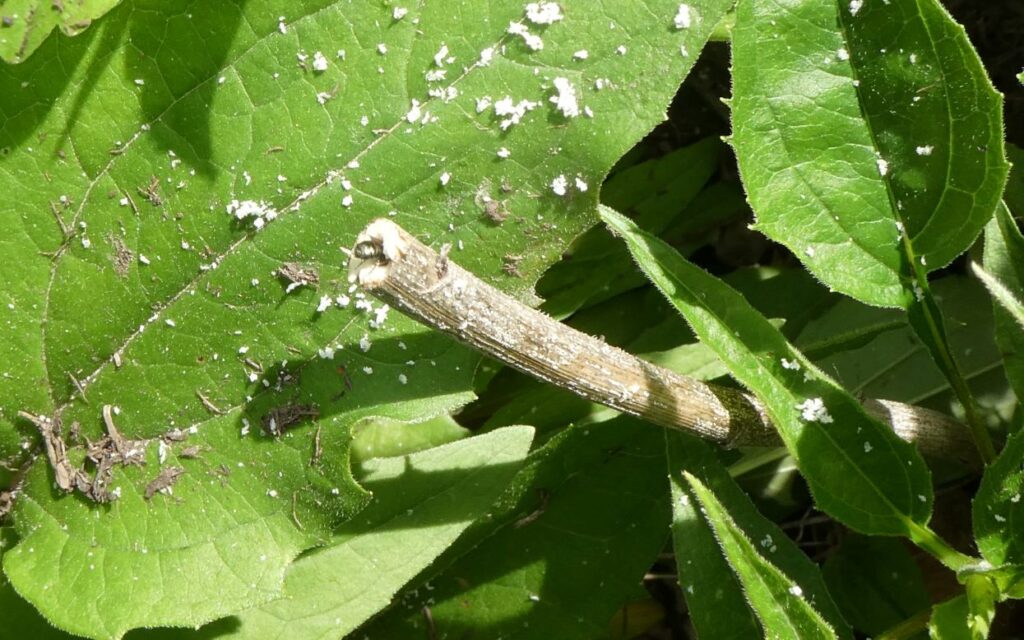
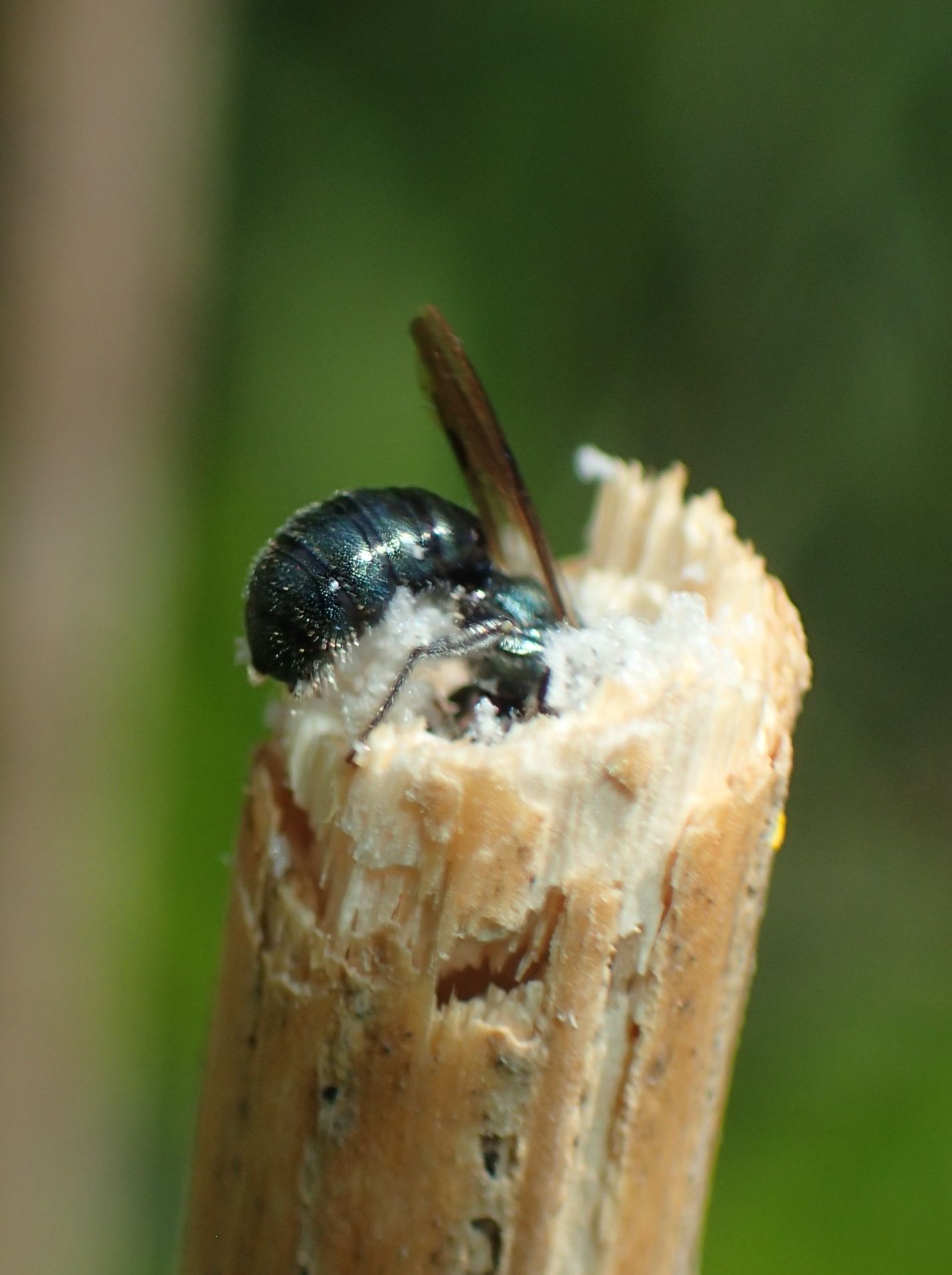
Some cavity-nesting bees excavate their own cavities, like these small carpenter bees (Ceratina spp.) which can hollow out stems with soft pith for their nesting sites.
Cavity-nesting bees that require pre-existing cavities
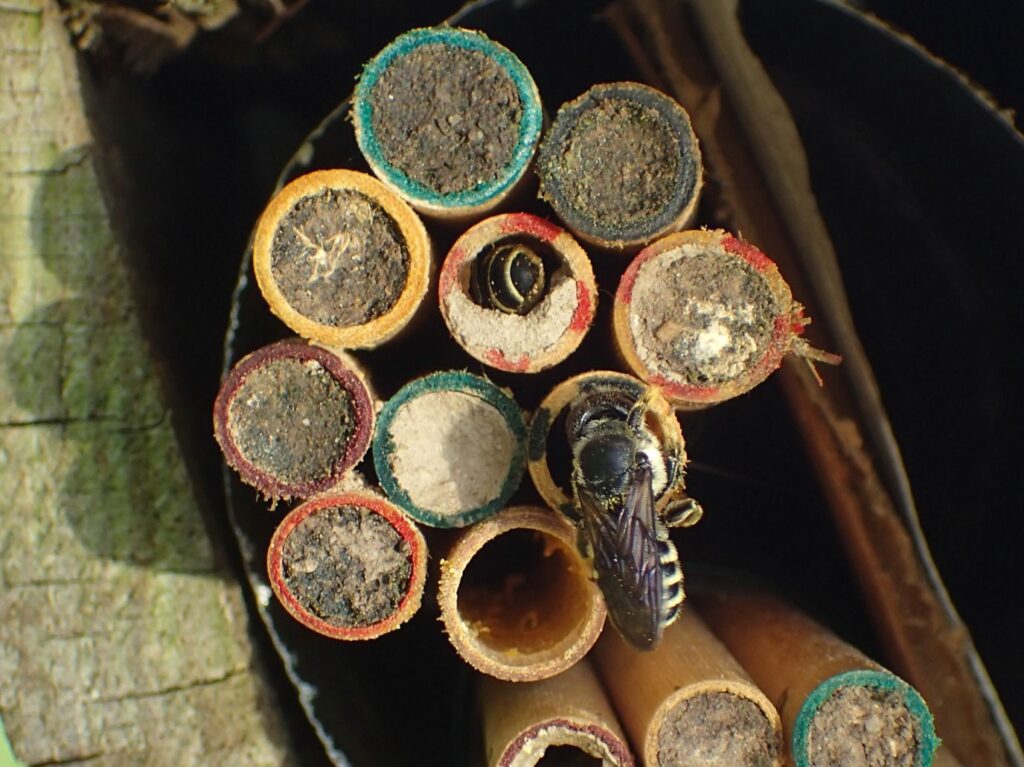
Other cavity-nesting bees cannot hollow out their own nesting tunnels, and so seek out natural cavities like hollow stems of plants, tunnels carved by beetles in dead wood, and other cracks and crevices. Artificial nest cavities in the form of the hollow reeds shown here or holes drilled in wood are also readily used by these bees. Here a leafcutter bee is seen bringing provisions of nectar and pollen or nesting material to one of these nesting tubes. The abdomen of another bee can be seen in an adjacent tube.
Other insects besides bees use these cavities as nest sites
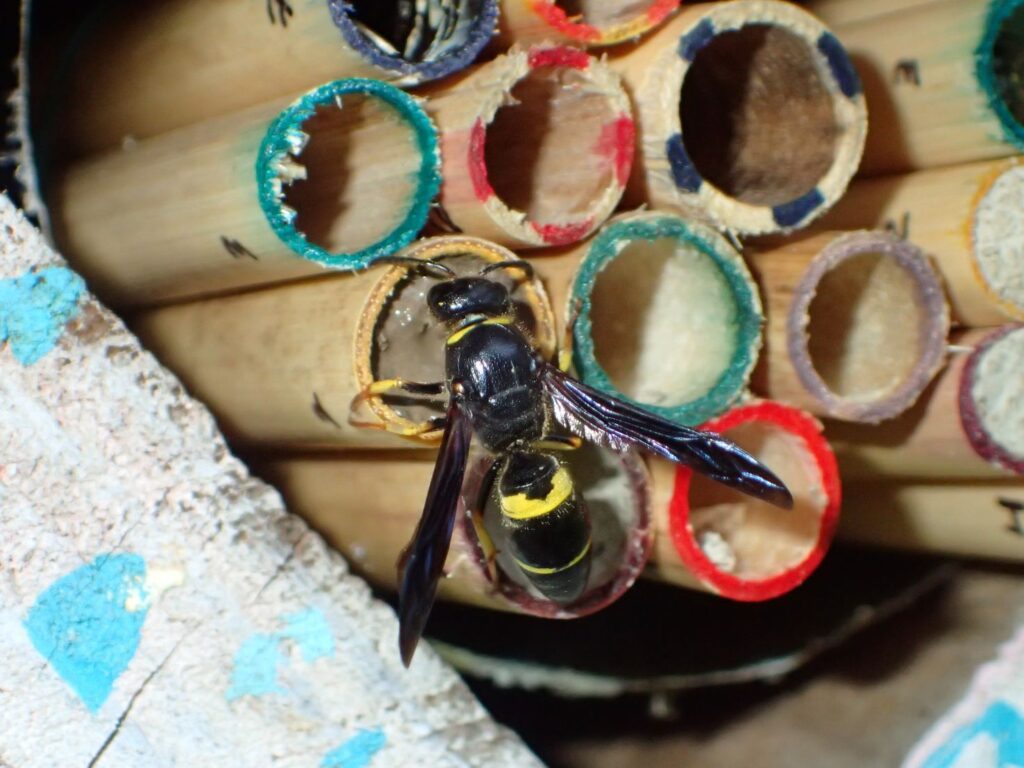
Solitary wasps will also use these pre-existing cavities as nurseries for their young. For example, potter wasps (Vespidae) use mud to divide the cavities into separate brood cells, which each receive an egg and provisions of caterpillar prey. Here a potter wasp is adding mud to seal the end of a cavity nest. Other wasps that use these tubes include square-headed wasps in the family Crabronidae and grass-carrying wasps in the family Sphecidae.
How do we study cavity-nesting bees?
In late spring we set out bundles of natural reeds in wooden boxes to attract these nesting insects to learn more about their natural history and local diversity. Through field notes and photographs, we track when and how these cavities become occupied throughout the spring and summer.
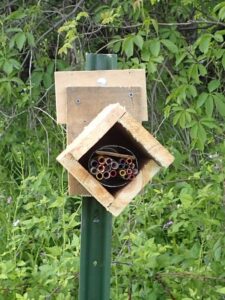
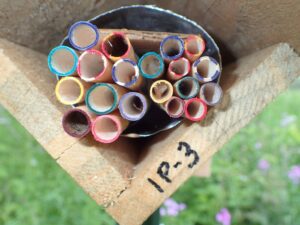
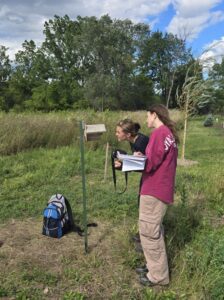
Monitoring the tubes over time
15 July 2026
The light brown fill material seen in five tubes in this box is mud used by potter wasps, which are typically the earliest occupants of these cavity nests.
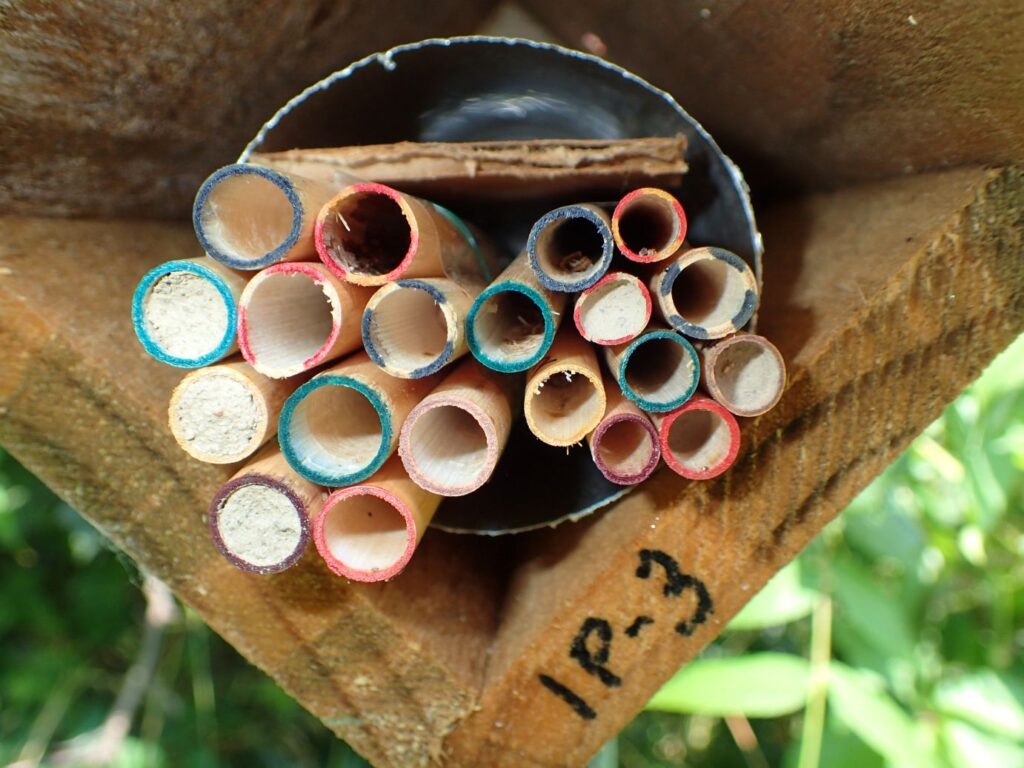
19 August 2026
Darker fill material in the bundle of tubes on the right in August is made of chewed-up leaves used by leafcutter bees in the genus Megachile. The grass-filled tube in the left bundle is from a grass-carrying wasp, Isodontia mexicana. These occupants are typically more active later in the summer.
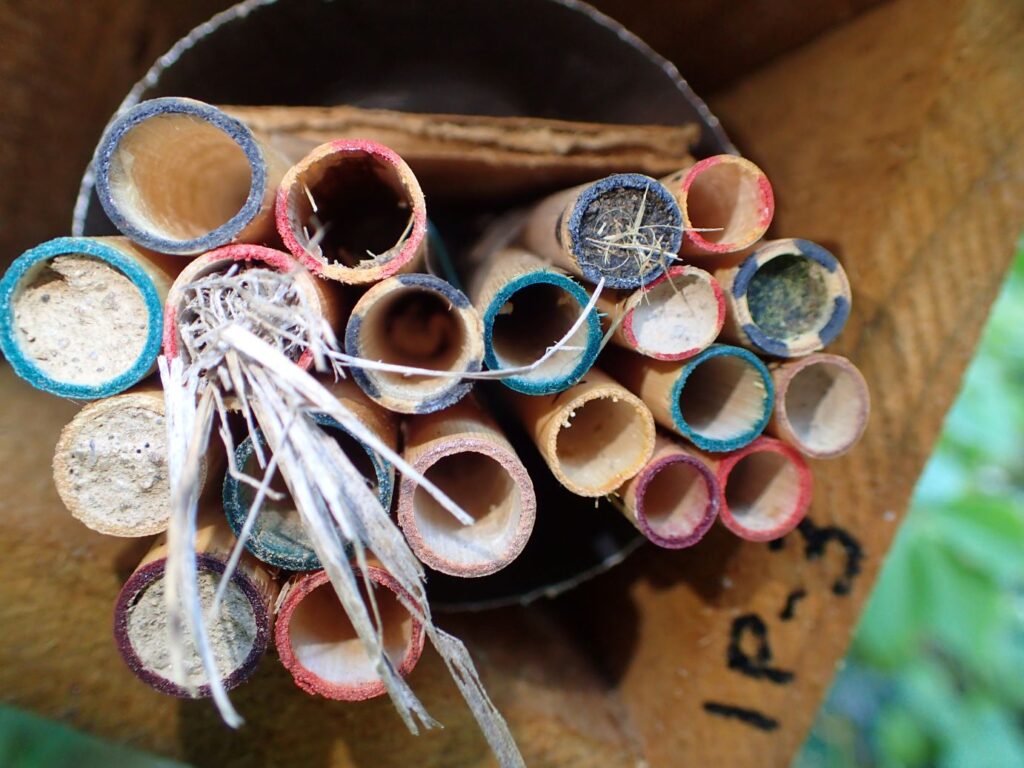
How do we know who is inside the tubes?
In late fall, we retrieve the tubes and store them in a cold room while the insects are dormant. In the spring, we open up the tubes to obtain preliminary identifications. At this point the insects are in the larval or pupal stages. The insects continue their development and emerge as adults in late spring and early summer; we collect a few individuals as vouchers to make identifications to the species level and release the rest at their original nest locations.
Where are our bee boxes located?
Our boxes are set up in a variety of different habitats on campus, from more natural areas like our campus Arboretum and a no-mow zone, to small native plant gardens near campus buildings (ISC and Greenhouse). In 2025, we started setting up the boxes in the nearby Genesee Valley Conservancy’s Island Preserve. The Genesee Valley Conservancy received a grant to establish pollinator habitat in a recently donated parcel of the preserve. Data collected from these nest boxes will provide baseline information on the abundance and diversity of cavity-nesting bees and wasps at the Island Preserve. These data will be useful for detecting changes as more native pollinator-friendly plants are added to the preserve as part of restoration efforts.
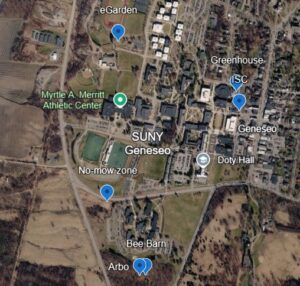
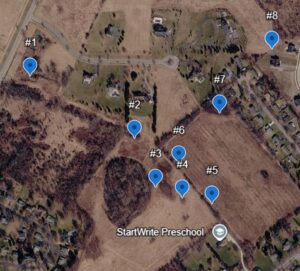
Map data: Google, Airbus; Imagery date: 3/31/2025
Examples of some of the occupants we find
Mason bees
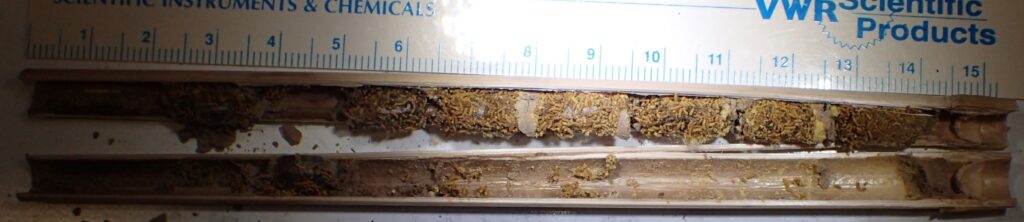
Above: Dissected tube (IP4-lg-9) containing bee cocoons separated by dividers made of mud.
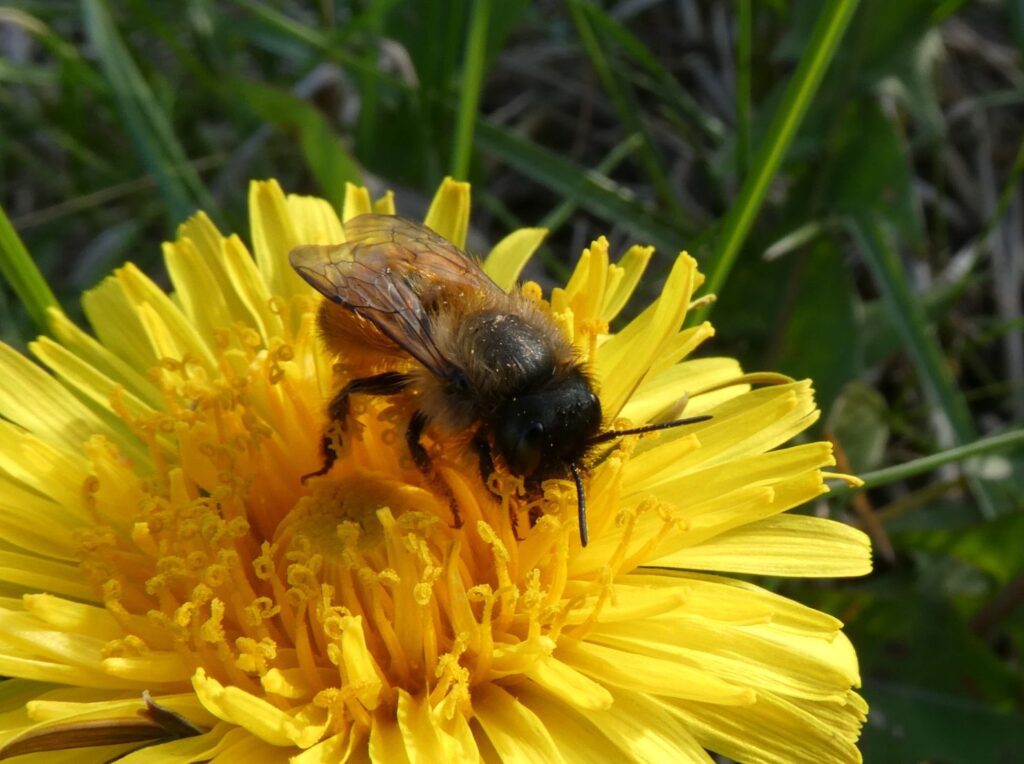
Right: Mason bee (Osmia taurus) that emerged from this tube, released on 27 April 2026 in the Island Preserve. This bee species is not native to North America.
Mason bees
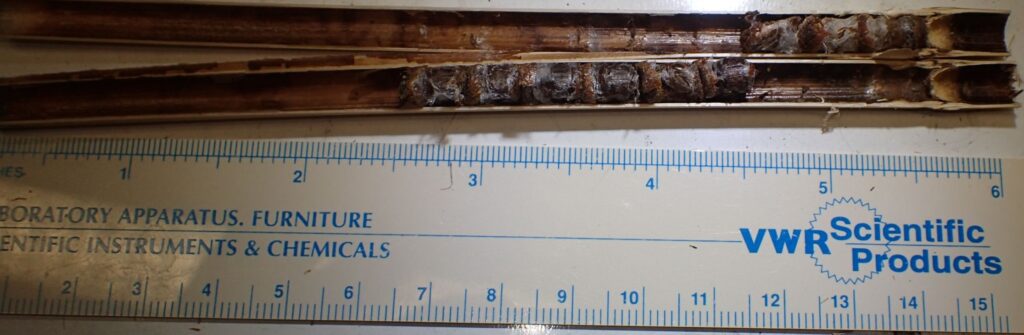
Above: Dissected tube (IP2-sm-3) containing bee larvae in small translucent cells, separated by masticated leaf material.
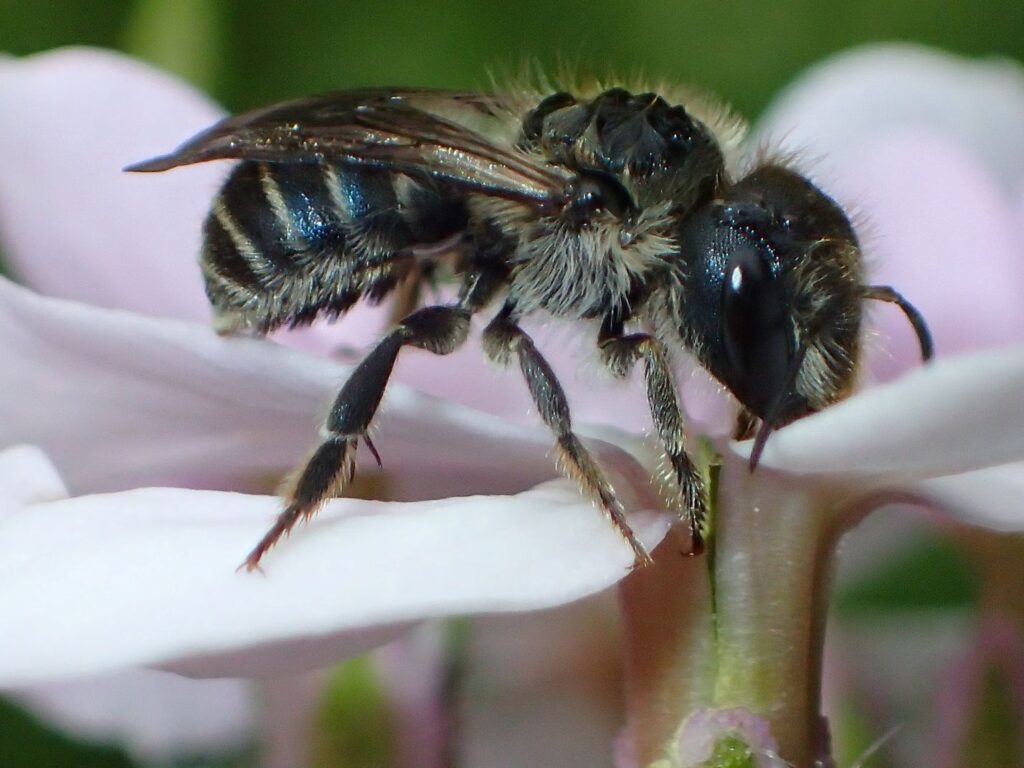
Right: Mason bee that emerged from this tube, released on 10 June 2026 in the Island Preserve.
Leafcutter bees

Above: Dissected tube (IP6-sm-4) containing bee larvae encased in tubes fashioned out of cut leaf fragments.
Right: Leafcutter bee that emerged from this tube, released on 12 June 2026 in the Island Preserve.
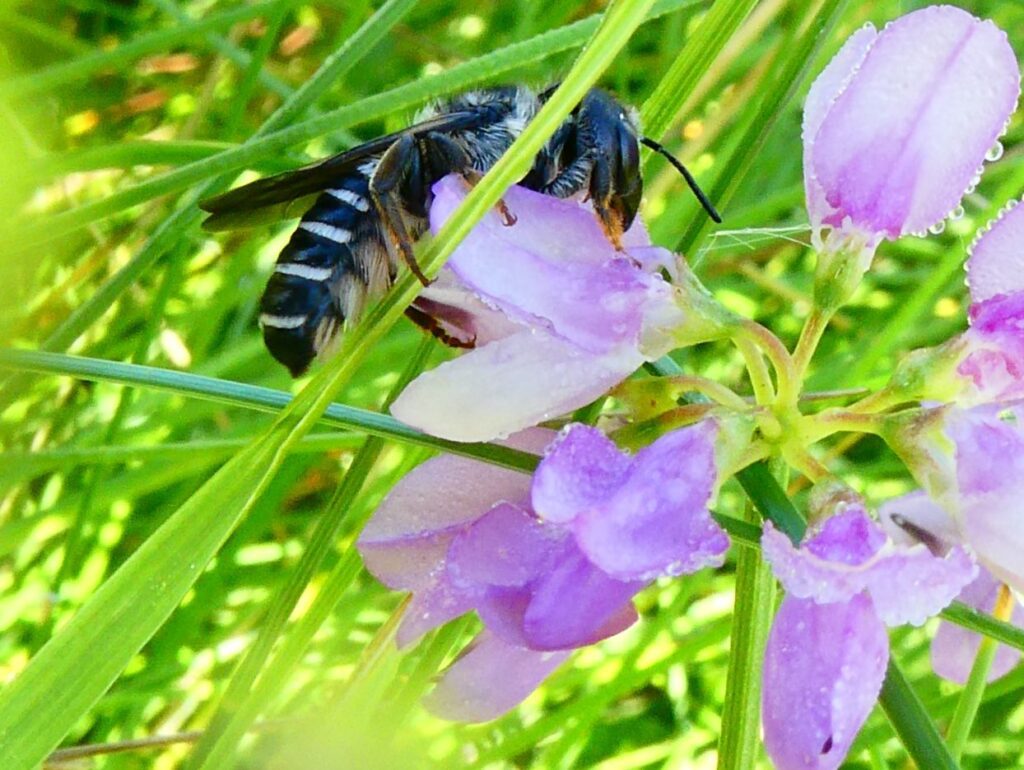
Leafcutter bees – Megachile pugnata
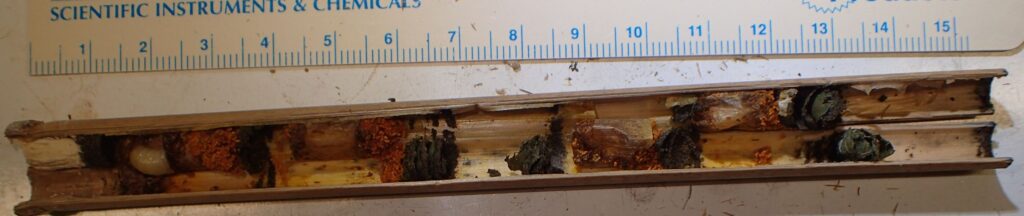
Above: Dissected tube (IP3-sm-7) containing translucent cocoons separated by dividers of cut leaf fragments.
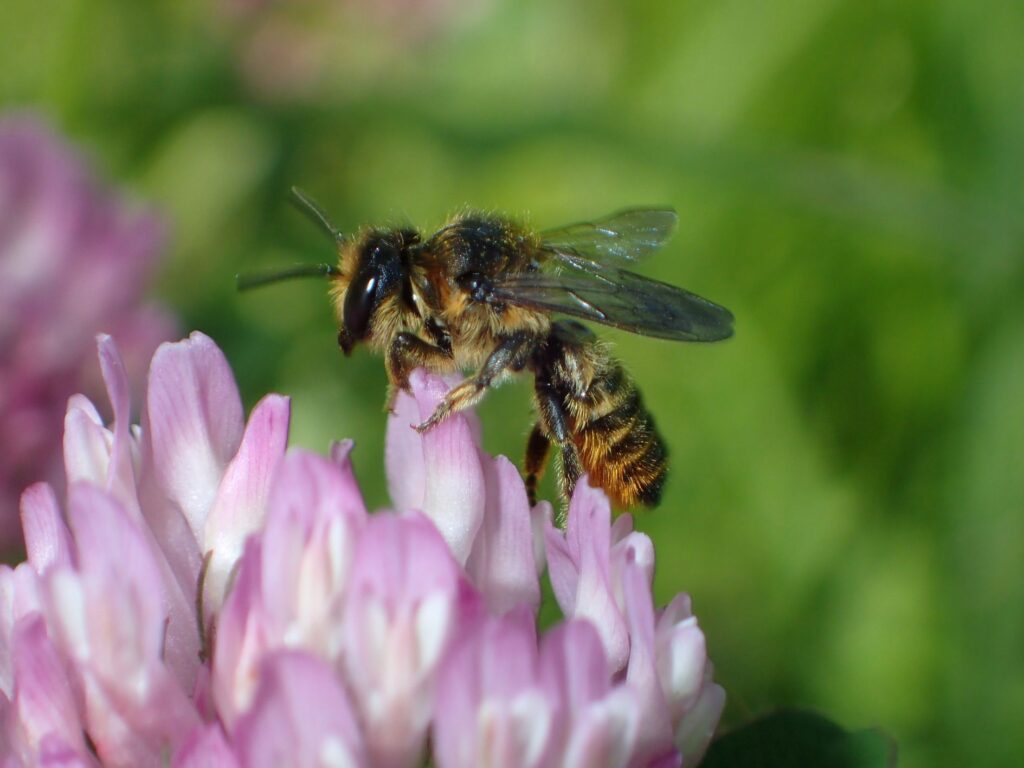
Right: Leafcutter bee (Megachile pugnata) that released on 29 June 2025 in the no-mow zone on campus. This is the most common bee we find in our nest boxes on campus.
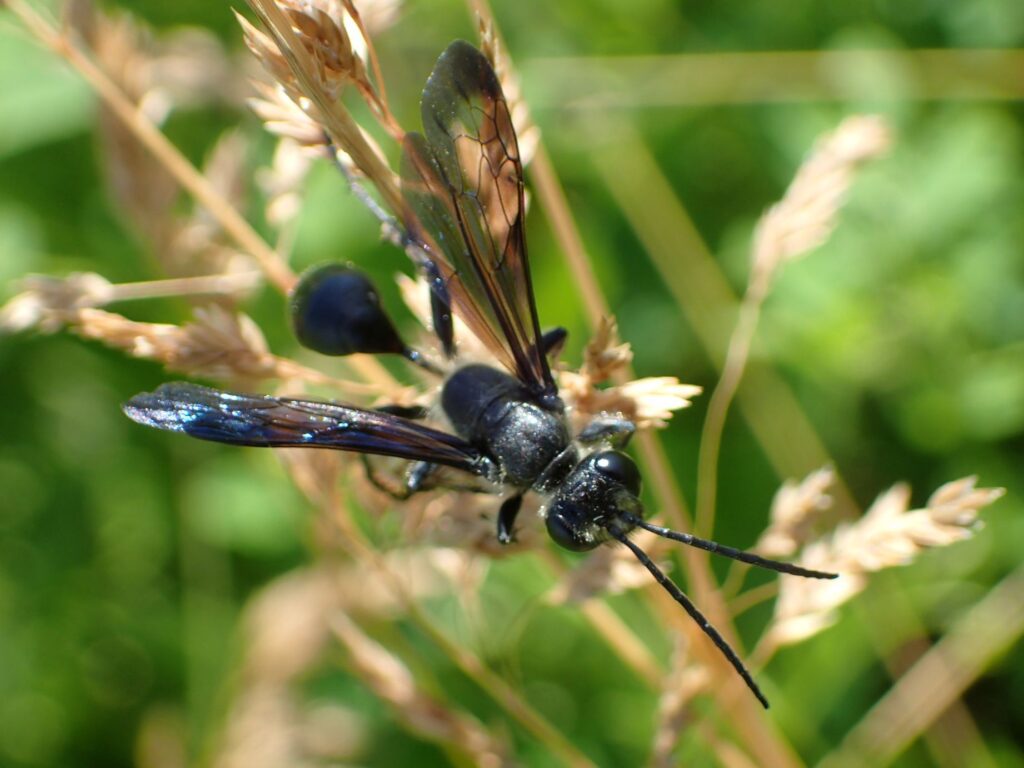
Grass-carrying wasps – Isodontia mexicana (Sphecidae)
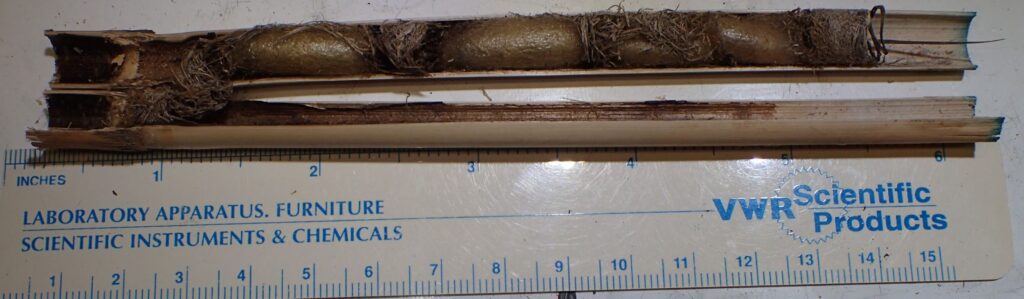
Above: Dissected tube (IP8-3-lg) containing grass wasp cocoons separated by dividers of packed grass.
Grass-carrying wasp (Isodontia mexicana) released on 17 June 2026 at the Island Preserve.
Student researchers
Many students have contributed to our lab’s research on native bees. Below is a list of student research projects on cavity-nesting bees:
- Sophia Stang (’26), Elliott Stern-Frisenfelds, Hanna O’Reilly, and Julia Lingenfelter (’25). (2025-2026). Cavity-nesting bees and wasps: patterns in phenology and habitat use. Presented at the 2026 Ecological Society of America Great Lakes Regional Branch Conference in Cleveland, OH. Poster
- Julia Lingenfelter (’25), Sophia Stang (’26), and Carly Wick (’25) (2024-2025). Identities and nesting patterns of cavity-nesting bees and wasps. Presented at the 2025 Northeast Natural History Conference in Springfield, MA. Poster
- Daniel Lemon (’24), Emma Parker (’23), and Carly Wick (’25). (2023-2024). Nesting patterns of cavity-nesting bees and wasps. Presented at the 2024 Northeast Natural History Conference in Albany, NY. Poster on KnightScholar
- Stephen Hoare (’23), Rachel Williams (’24), and Kaitlyn Latorre (’22) (2021-2022). Timing of use of artificial nests by exotic mason bees. Presented at SUNY Geneseo’s GREAT Day 2022. Poster on KnightScholar
- Allison Menendez (’21). (2020-2021). Evaluating the use of artificial nests by native bees. Presented at the 2021 Northeast Natural History Conference (virtual). Posters on KnightScholar 2020 2021. Alli also held a Geneseo Foundation Undergraduate Summer Fellowship.
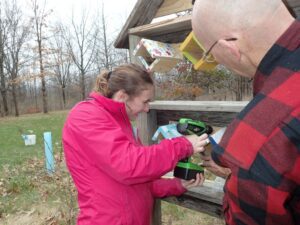
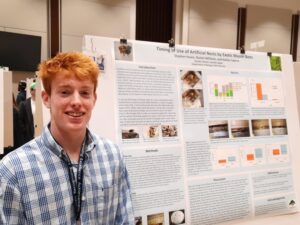
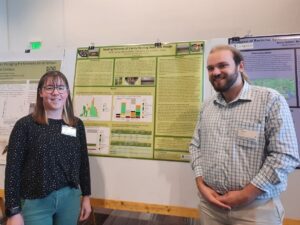
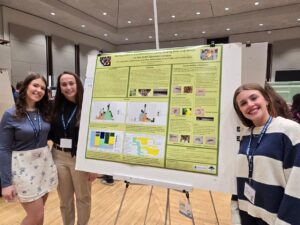
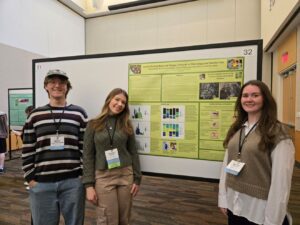
Before our focus on cavity-nesting bees, several students surveyed bees across several campus habitats to characterize our local bee diversity and patterns related to habitat and floral resources.
- Sam Heraghty (’18). (2017-2018). Patterns in native bee diversity: effects of floral resources and habitat. Presented at the 2017 and 2018 Northeast Natural History Conferences in Cromwell, CT, and Burlington VT. Sam also held a Geneseo Foundation Undergraduate Summer Fellowship. Poster 2017 2018
- Meghan Barrett (’16) and Ryan Carpenter (’16). (2015-2016). Native bee diversity and abundance at SUNY Geneseo. Presented at SUNY Geneseo’s GREAT Day 2016. Poster
(c) 2026 Jennifer L. Apple. All photos by J. Apple unless otherwise indicated. Last update: 21 June 2026.